As part of the quest to build models based on the products of the Leeds locomotive builders a Fowler steam locomotive was a must. Fowlers were early adopters of diesel engines and ceased production of steam to concentrate on diesel locomotives. The vast majority of Fowler’s steam locomotives were for export; this was due to Fowler producing agricultural machinery especially for the mechanisation of the sugar cane industry in the colonies.
As what should I chose as a prototype?
Two coincidences came together to make the choice for me. Firstly, I’d purchased an Accucraft Talgarth power unit which is an 0-4-0 with particularly with well-made Walschaerts valve gear, and this needed a home. Secondly, I was following the Steam Workshop YouTube videos on the rebuild of a repatriated 0-4-2 Fowler from Tully Sugar Mill, Queensland, Australia. Helpfully they had a beautiful side-on works photograph taken outside Fowler’s works.
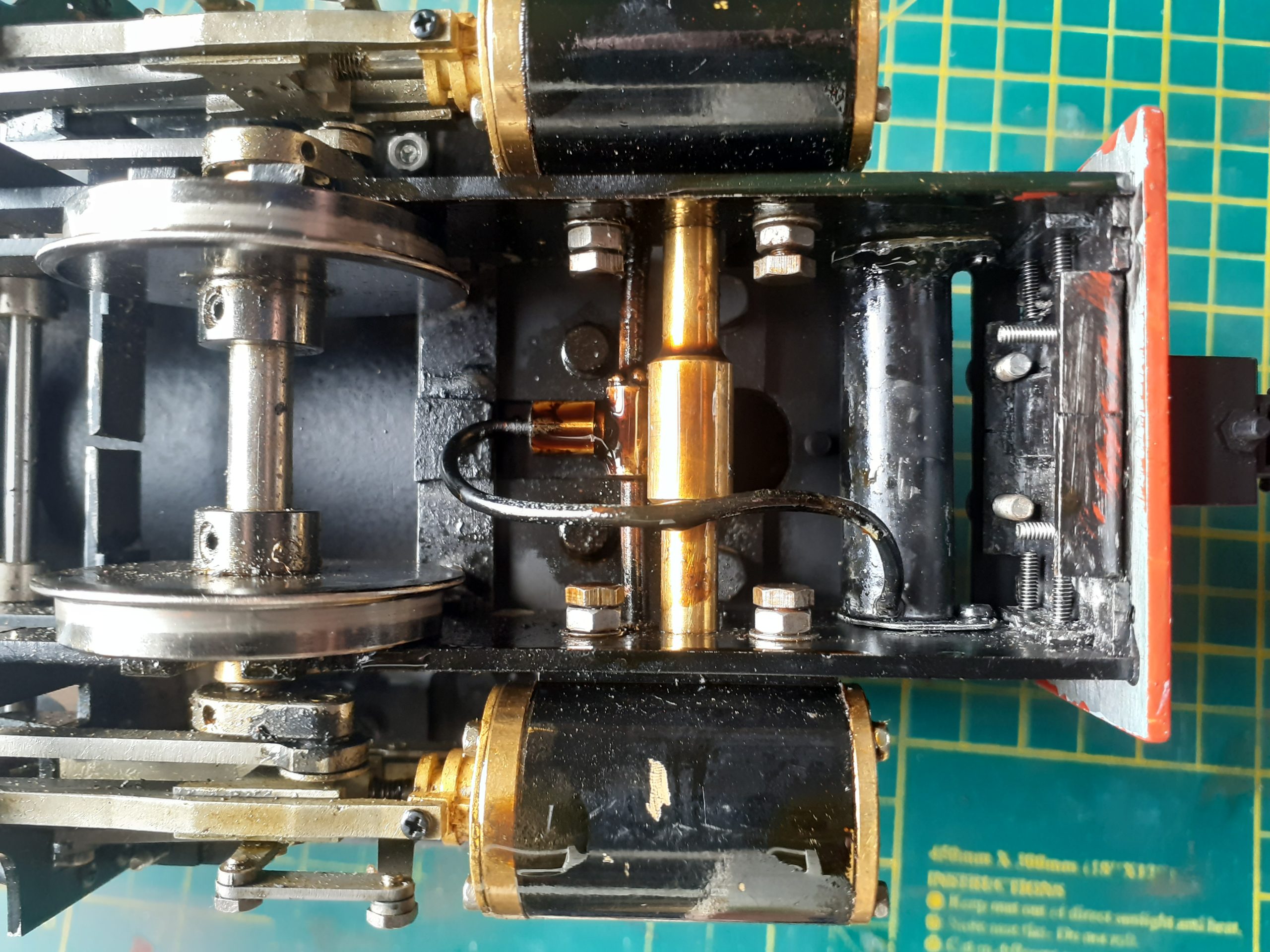
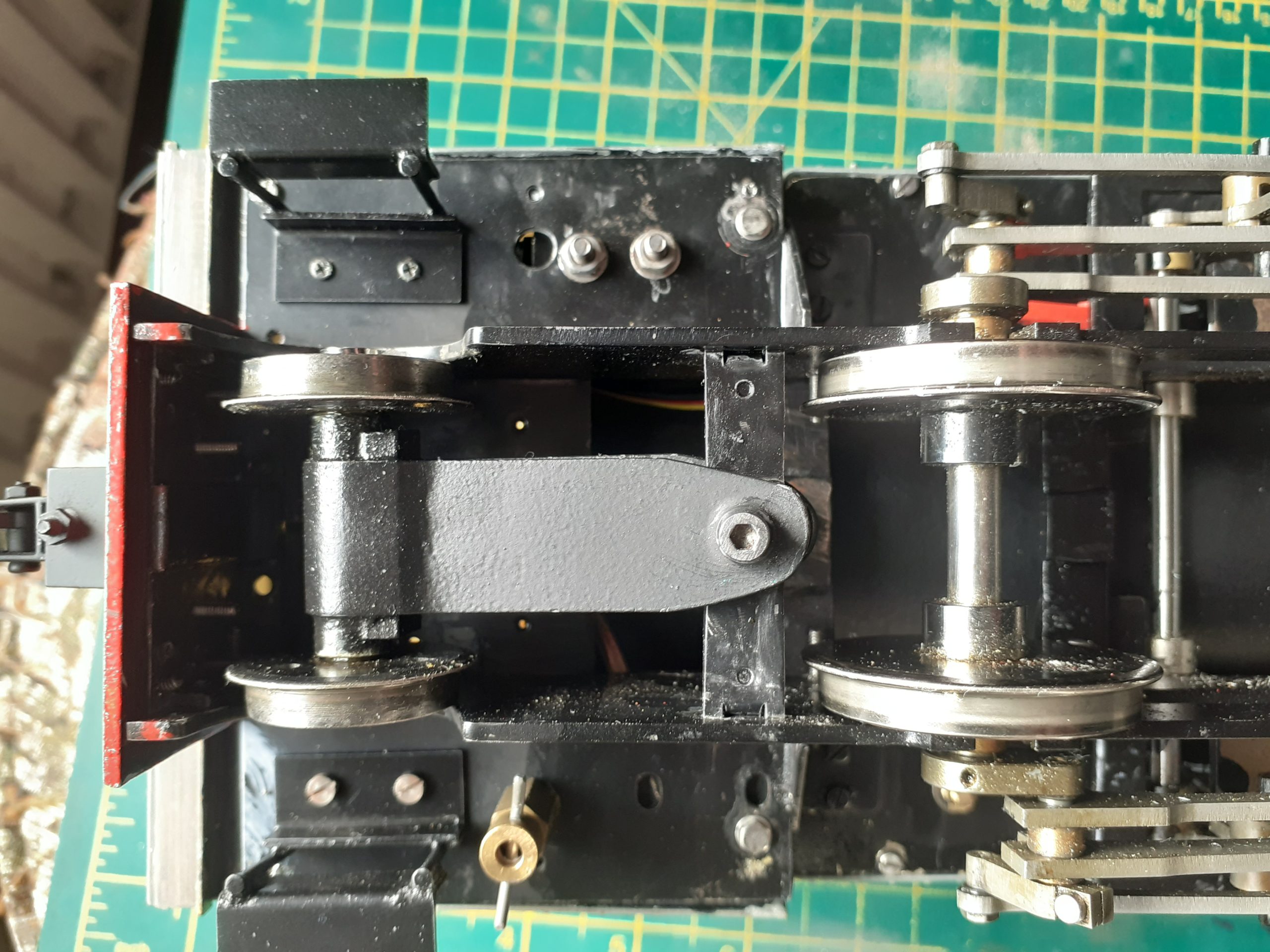
The chassis as designed is gauge adjustable between 45mm and 32mm and hence is a bit girthy and looks wrong on 32mm rails. I decided to thin the chassis by 13mm. The cross-chassis items which needed modification were; the buffer beams, the weigh shaft, steam feed manifold, exhaust steam manifold, frame spacers and the running plate.
Underside of the front of the locomotives with the items needing thinning; front buffer beam cross frame, displacement lubricator, exhaust manifold, steam feed, chassis cross frame and front axle
Underside of the rear of the locomotive with the items needing thinning; weighshaft, middle chassis cross frame, rear axle, rear chassis cross frame including truck pivot and rear buffer beam cross frame
Buffer beams – were cut down by removing the outer ends and new chassis mounting holes drilled.
Weigh shaft – is a 4mm shaft, I managed to lose the original so a new one was made from silver steel with grubscrew flats filed onto the diameter where needed.
Steam feed manifold – this was a simple matter of cutting the two pipes where they were silver soldered into the T-Piece fitting. This was drilled out, the pipes cut to length and re-silver soldered together.
Exhaust steam manifold – is made from a central T-Piece with two pipes screwed into it. These have a spigot and O-ring that seal into recesses in the cylinders. These were shortened by 6.5mm and re-threaded M5x0.5 and the manifold re-assembled.
Frame spacers – these have a fork and tongue arrangement on the ends which engage into the chassis side frames. This arrangement would have been difficult to replicate therefore these were shortened by cutting out 13mm from the middle and re-silver soldered together with a doubling plate. A fixture made sure they were all the same length and parallel.
Axles – ends have two flats at 180 degrees to each other to which the cranks are grub screwed on. These needed extending further down the axles by 6.5mm, this was a simple V-block milling operation with the ends shortened.
Running plate – not required and provided a source of plate material.
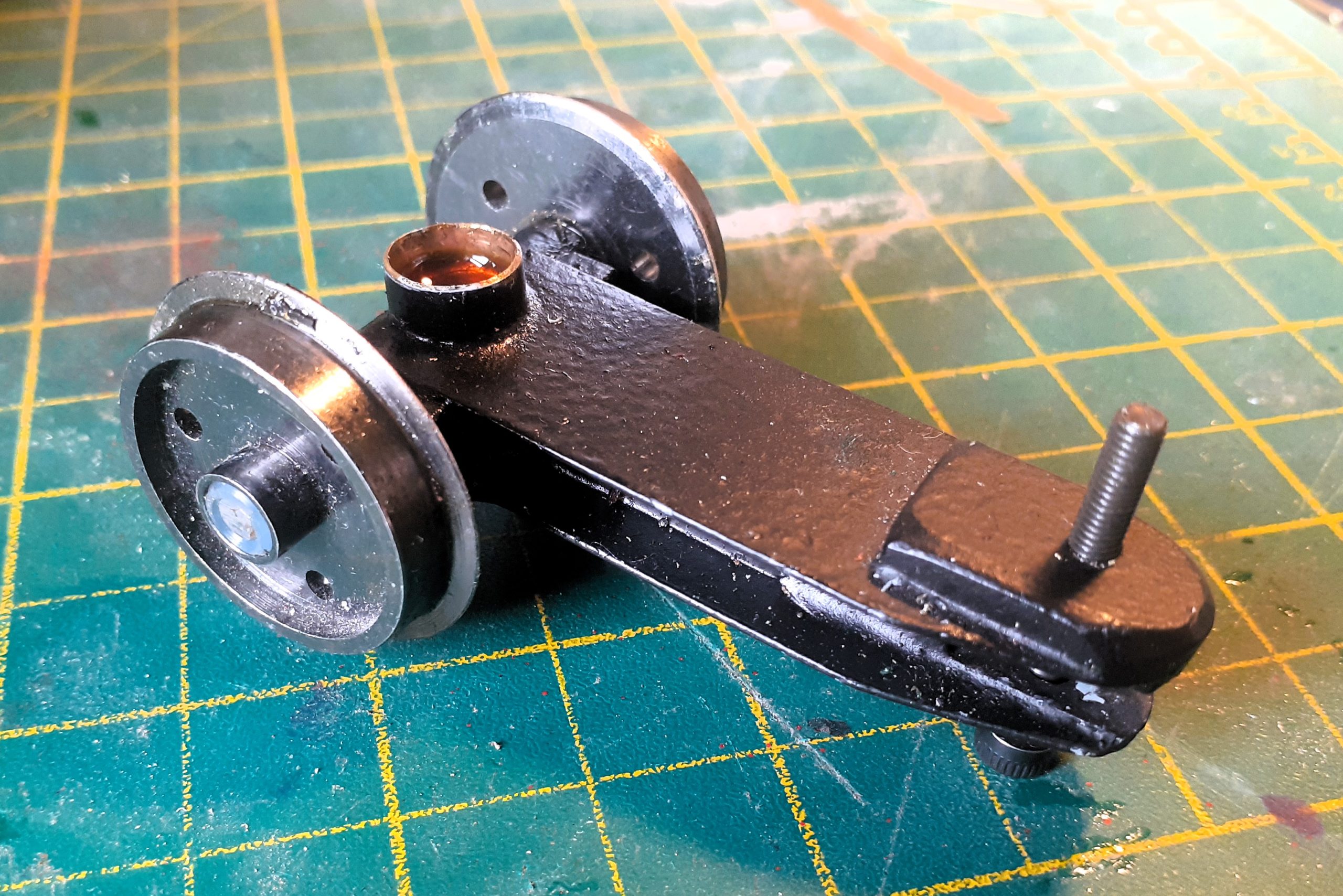
The other major alteration was the fitting of the trailing truck. A pair of surplus Accucraft Lynton and Barnstaple wagon wheels were deemed to be suitable. A new axle was made with a bearing block. These were attached to a pivot arm with its pivot on the chassis spacer. The truck frame has enough self-weight to stay on the track without needing any weight transferred from the locomotive. Cut outs for the wheels were cut and shaped into the rear of the chassis side frames to allow the truck to swing.
The trailing truck frame, the M3 cap crew makes the truck easily removeable.
Following the narrowing the chassis was fully tested and run-in on air.
The Boiler
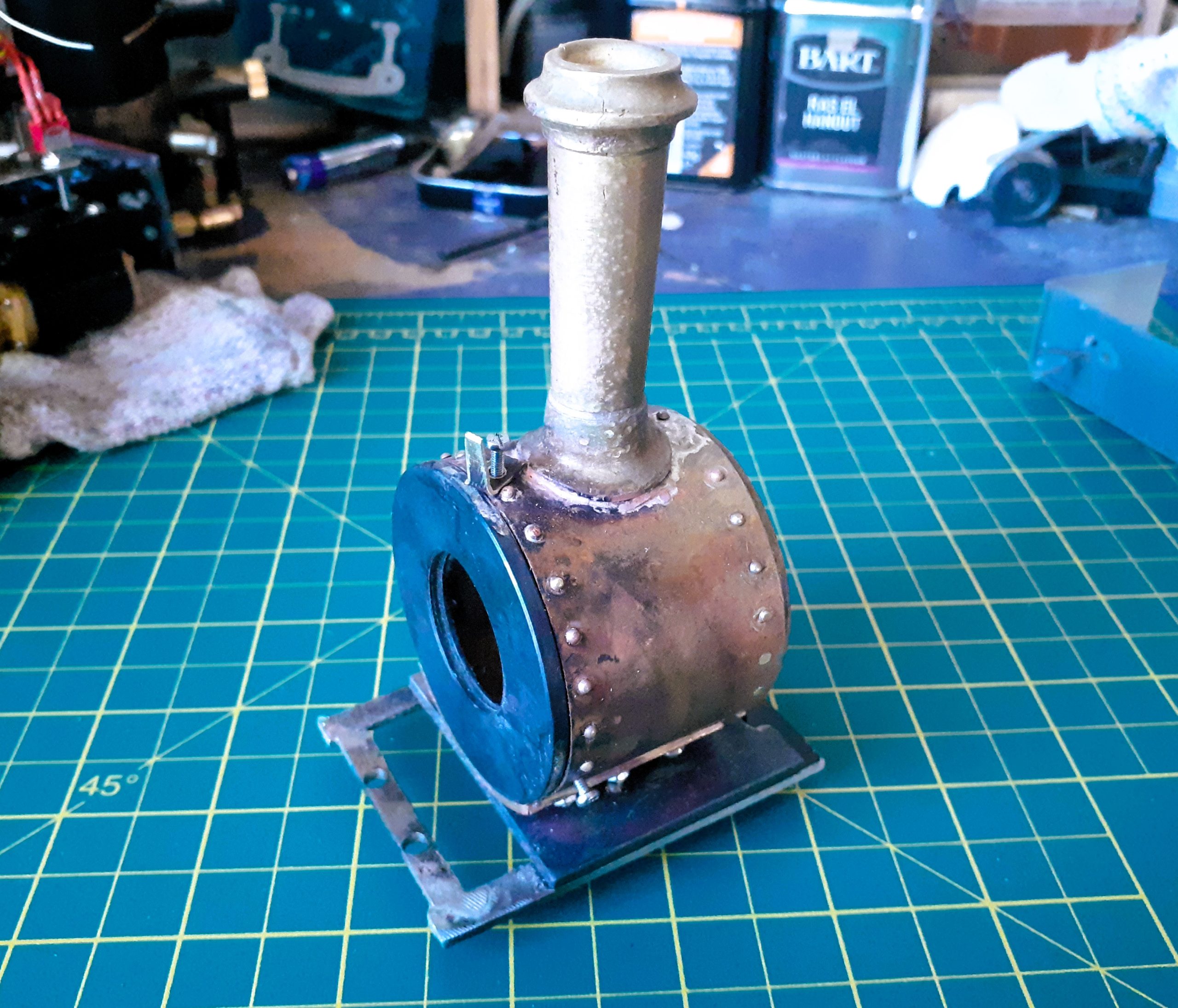
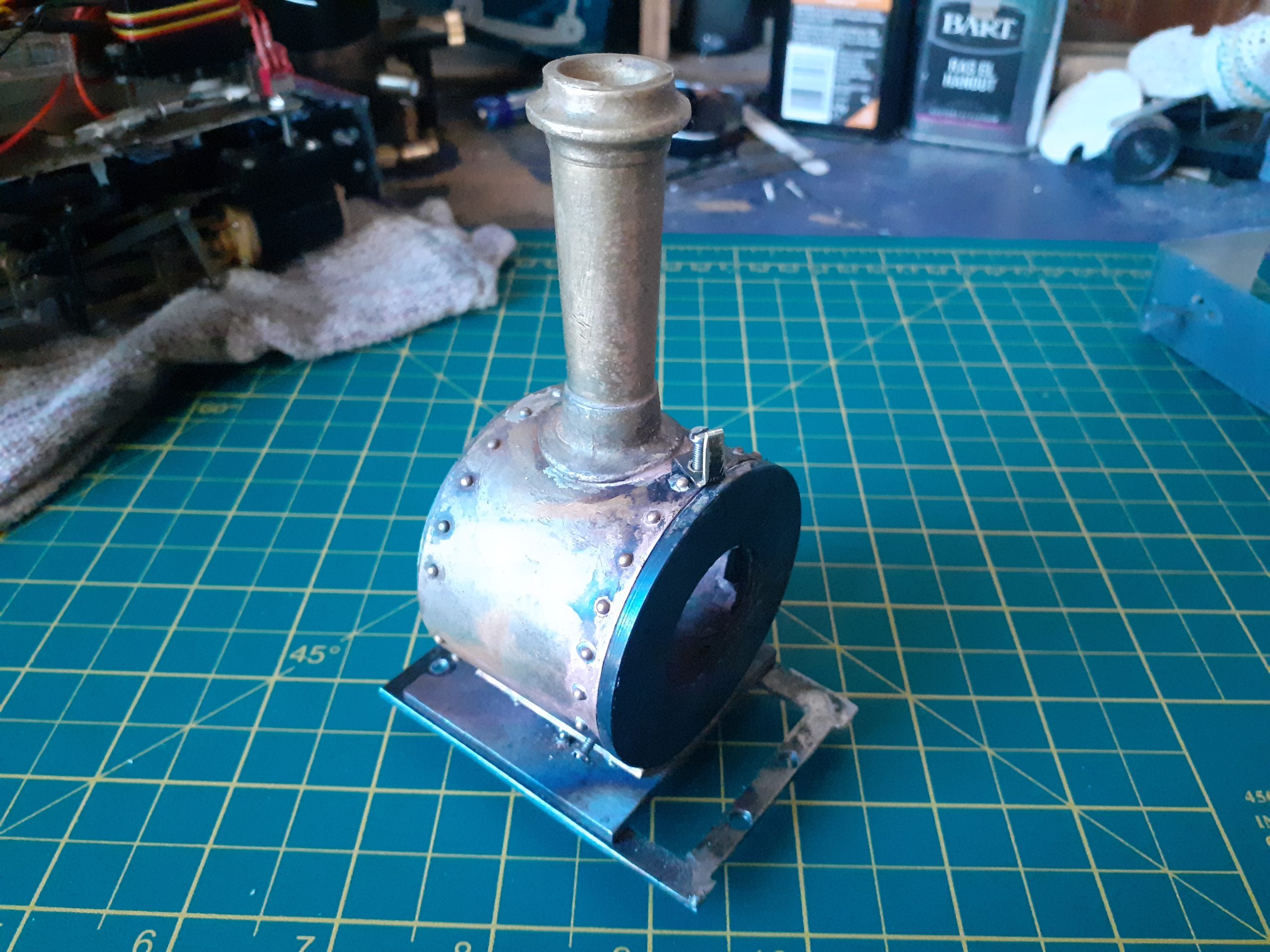
The existing boiler was reused. The oversize Accucraft smokebox was discarded and a new one made from copper tube. The chimney is a Talisman Casting from Trenarren Talisman range as used on Pearse SLR No14. The mounting upstand was slightly shortened before the assembly was silver soldered to the smokebox.
The new smokebox and chimney
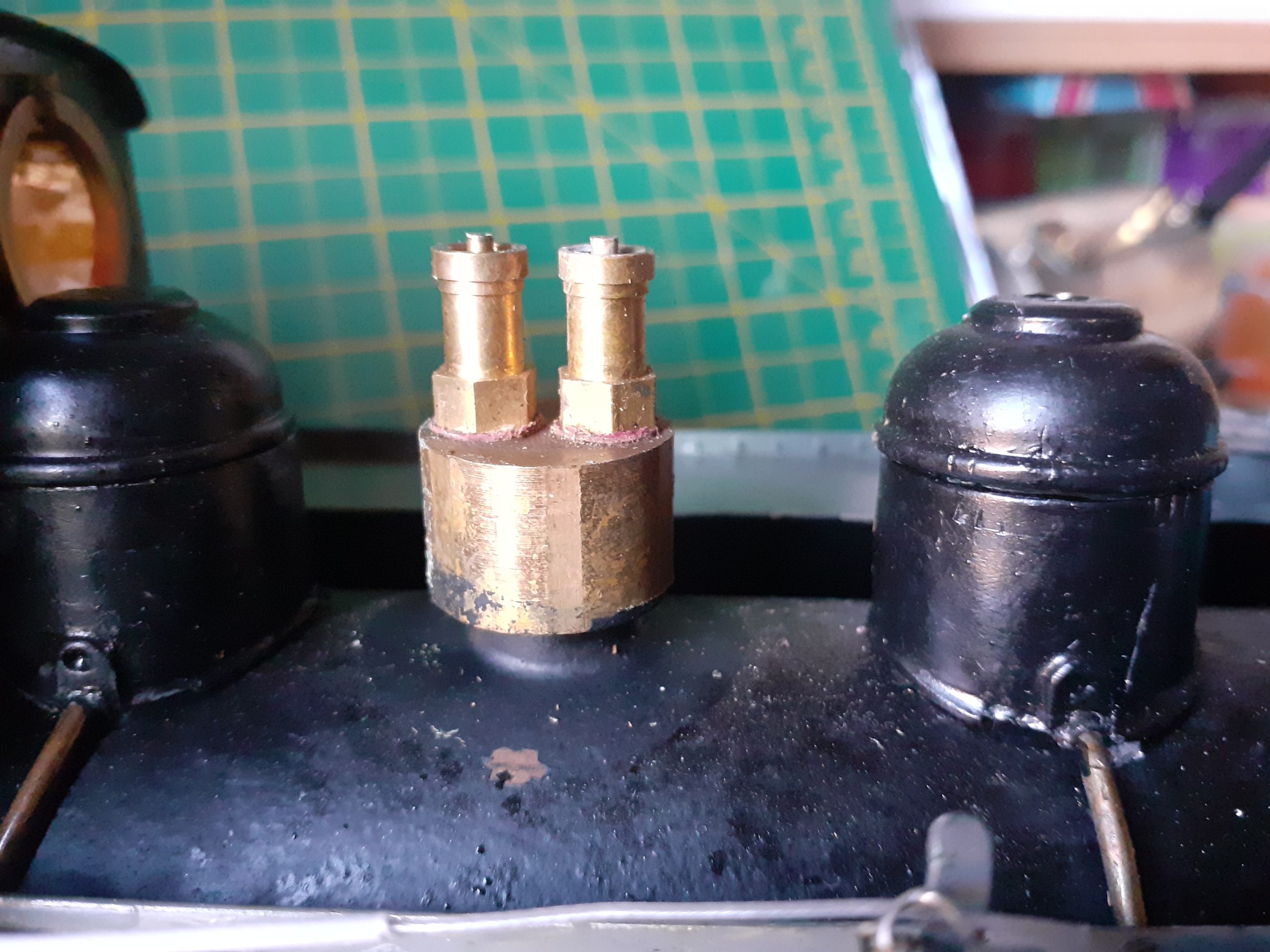
A new boss was silver soldered half way along the barrel for the safety valve. A manifold was turned up to give two outlets for the small Accucraft twin safety valves. Either side of the safety valves on the boiler top are two sand pots. The front one fits over the front boiler boss and covers the fill valve. The rear one is mounted on a stud soft soldered to the barrel. The rest of the boiler and its plumbing is pretty much as Accucraft intended.
The safety valve manifold converts the single boiler bush into two for the twin safety valves. The two sand pots are either side the front one sit over the existing fill bush and has a Goodall valve
Side tanks
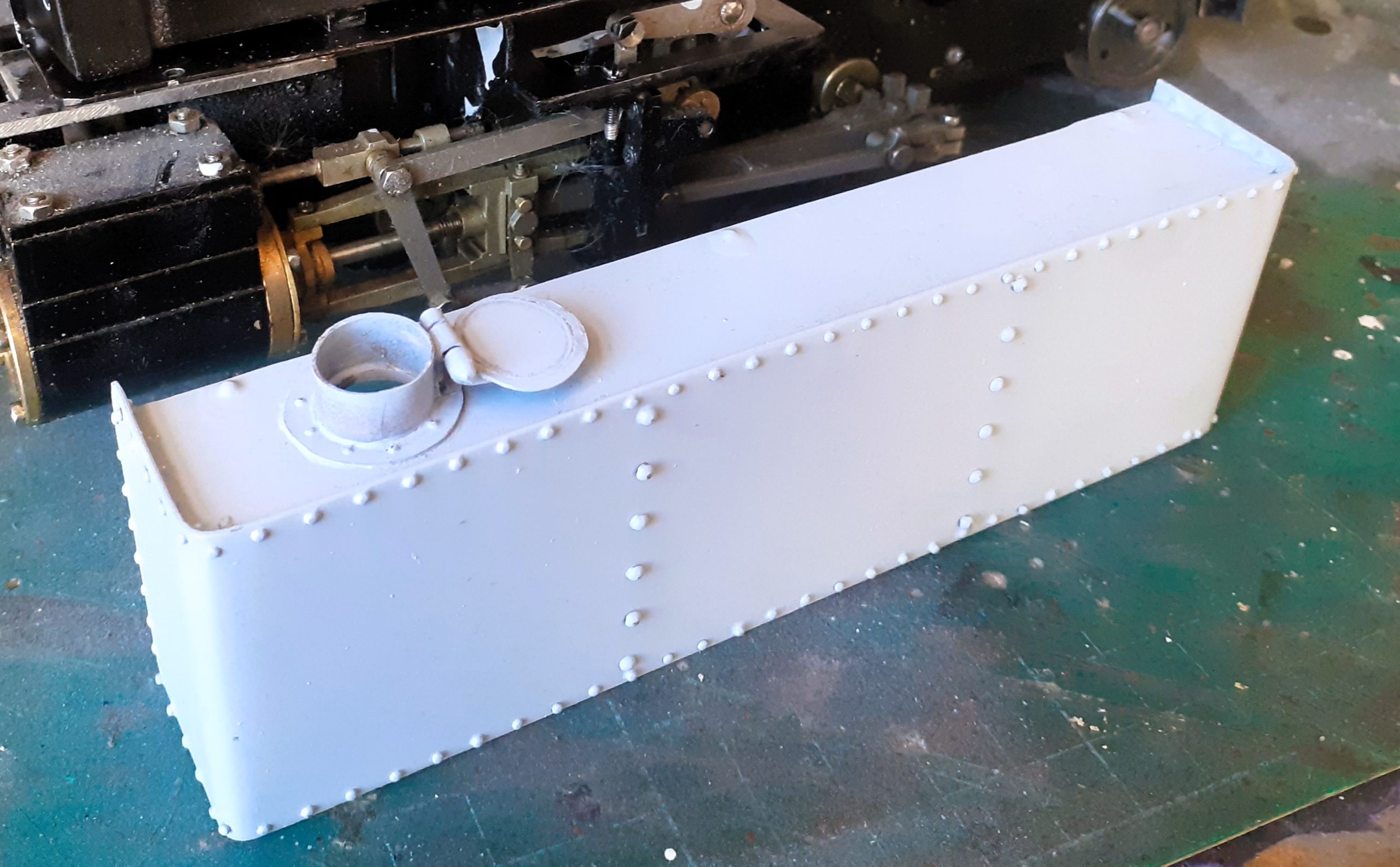
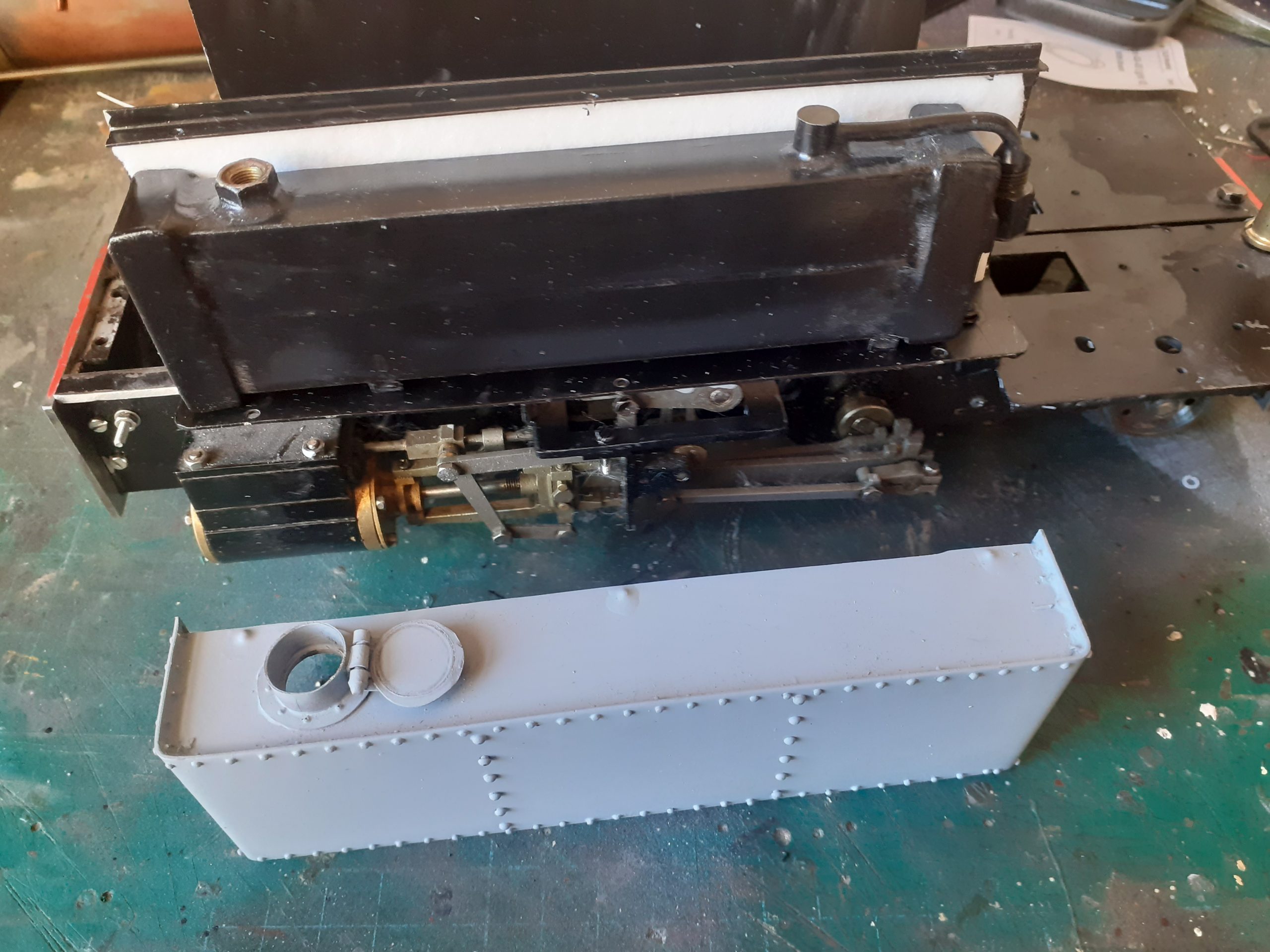
The side tanks were made in two halves; the inner piece was L-shaped forming the inner and bottom sections of the tank. This was folded-up from 28thou nickel silver and mounted to the chassis with brackets made from the surplus running board material. These were designed to be substantial as the forces from gas filling would be transmitted through them. The tank outer had radius ends with rivet detailing and hooks onto the top of the tank inner and screwed to the outer edge of the inner. The righthand tank contains the battery, the RC, the reverser servo, fuse, switch and charging socket. The Lefthand tank contains the gas tank. The tank tops have Locoworks fillers fitted. The one on the left tank gives access to the gas filler.
The lefthand tank decorative outer. The rivets are real rivets drilled and peened over before soldering. The tank fillers are opening ones from Locoworks.
Gas Tank
The gas tank was made from two lengths of 5/8th square brass tube silver soldered one on top of the other with three passages between them to allow gas to flow. Ends were made from ¾ brass tube with the ends folded over and again silver soldered on to square tube ends. An outlet pipe and a M5x0.5 filler boss were silver soldered to the tank so that the outlet is higher than the filling valve, thus preventing liquid gas carry over to the burner. Mounting feet were soft soldered to the gas tank base to mount onto the side tank base. A gap between the tank and the side tank inner is filled with insulation to reduce the heat from the boiler reaching the tank.
The gas tank installed into the lefthand side tank. The filler valve is below the opening tank filler
Cab
The design of the cab presented problems as the roof and side are butted together as if they are formed from one piece. This makes a detachable roof difficult to make and locate successfully during operation. I therefore made the cab and roof as one. To operate the locomotive a Train Department gas valve was fitted. This represents a handbrake stand mounted so as to be accessible from the open rear cab. Sliding cab back doors give access to the gas jet and the water top was moved to the front boiler tapping. The cab was a straightforward Nickel silver construction with brass angle in the corners held together with rivets and soft solder.
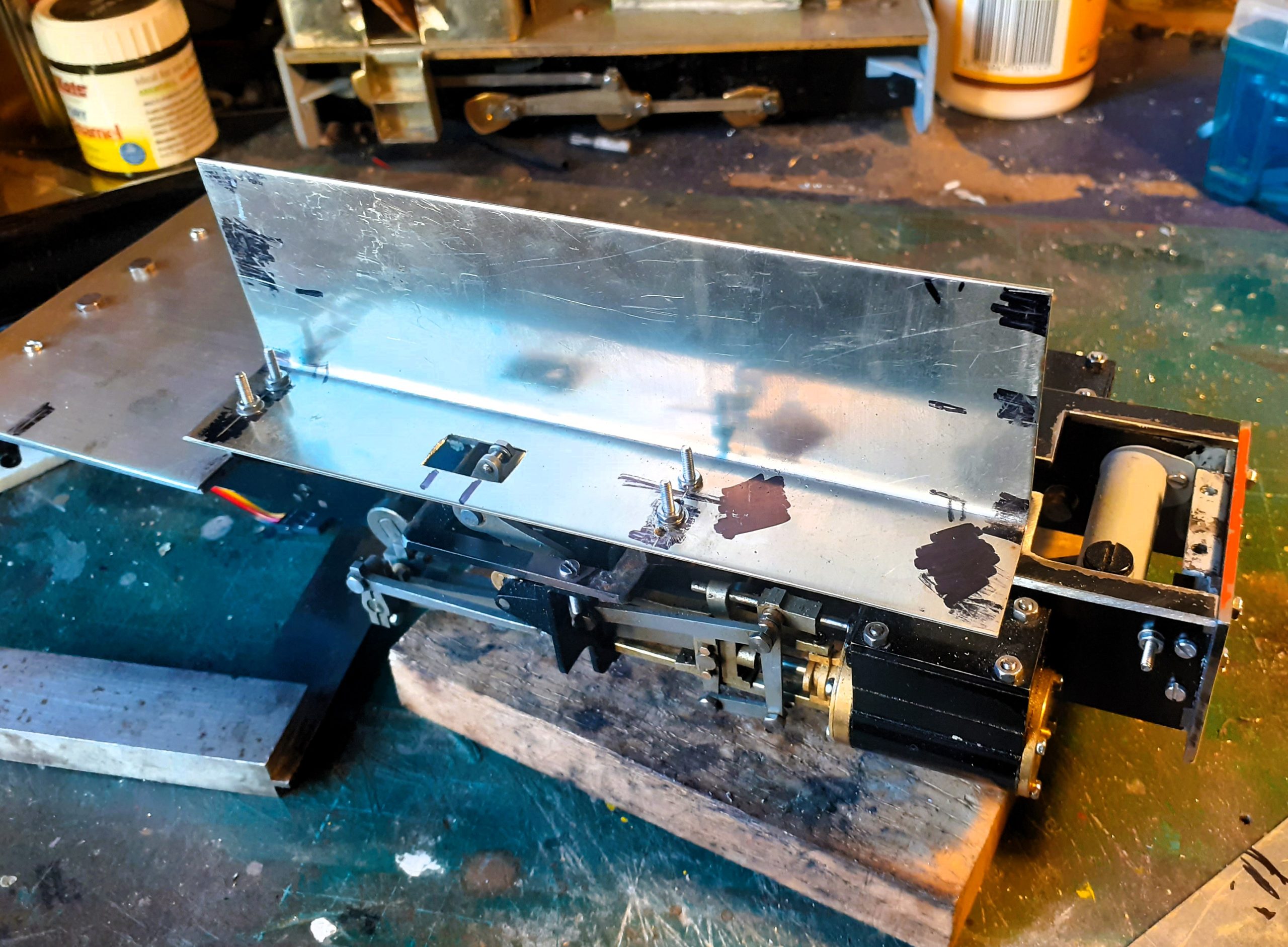
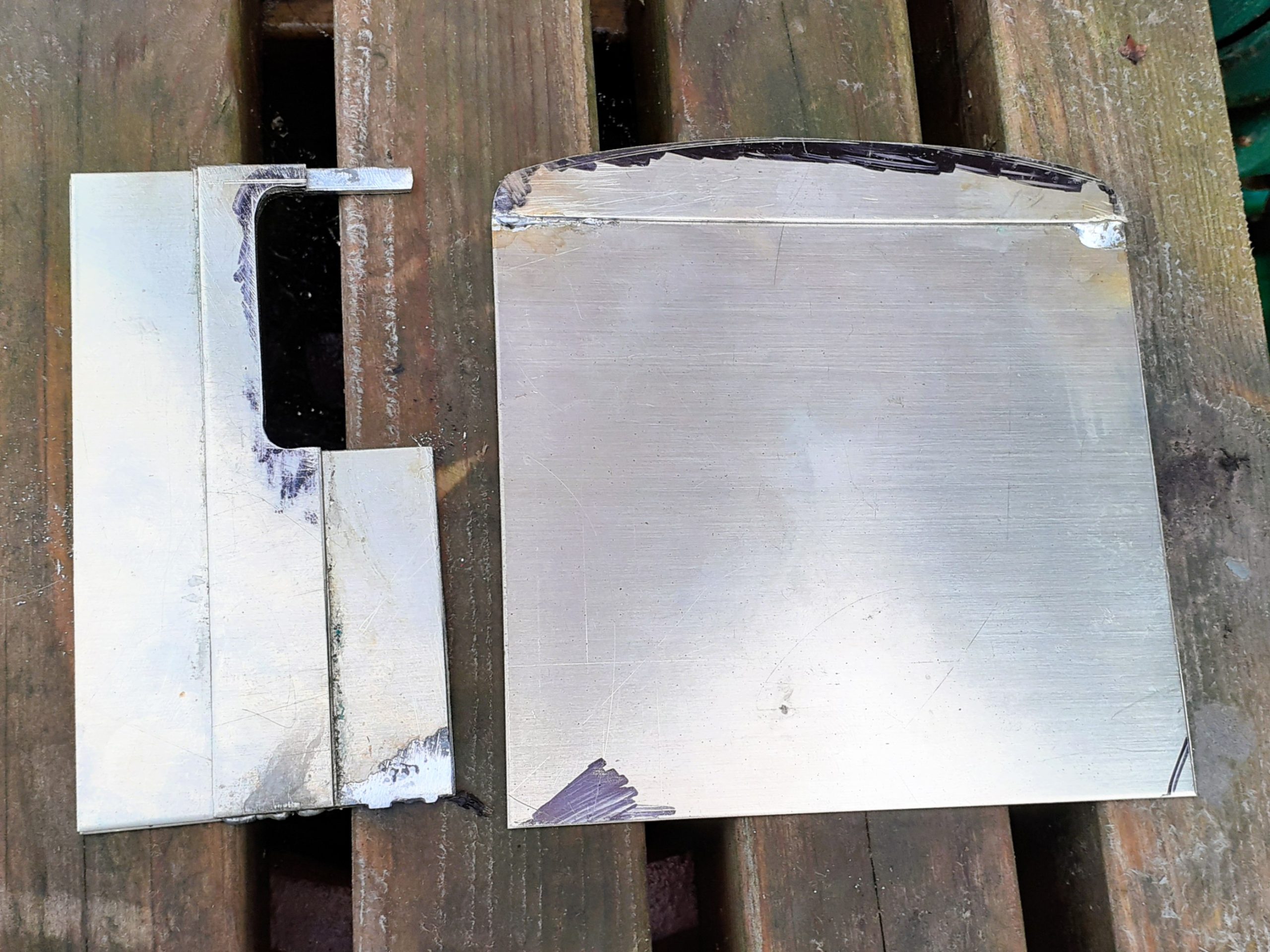
The cab sides and front and rear sheets were guillotined to size. They were soft soldered together to shape the cab opening apertures and the roof profile
Finishing.
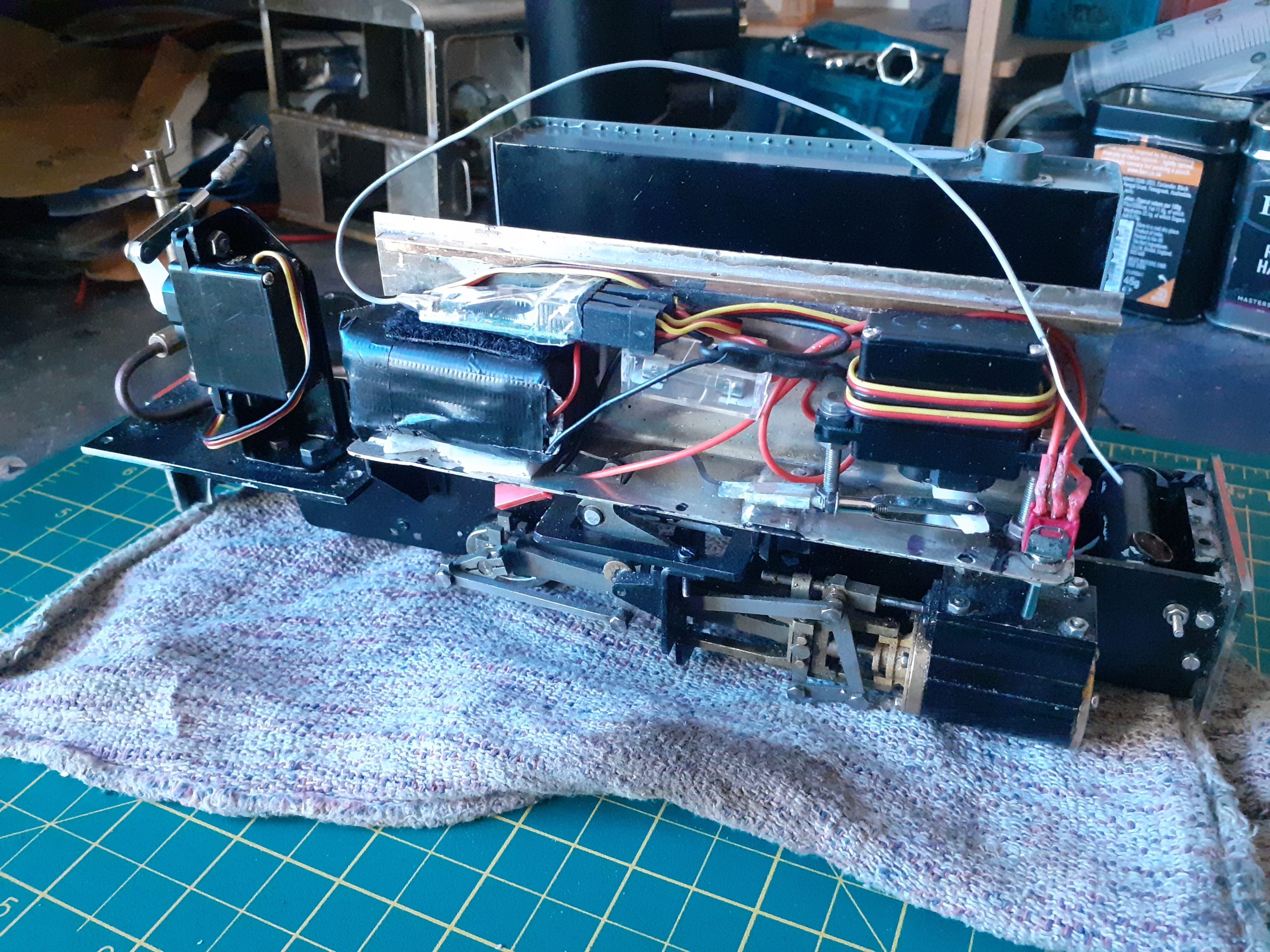
The electrical equipment is housed in the right-hand side tank. The reverser servo is mounted at the front with the on-off-charge switch below. The battery pack is mounted at the rear with the Micron Rx mounted above and a fuse in front. The Micron Rx has a long aerial which leaves the tank side and is wrapped in the fire irons on the tool rest so as to have good range without being noticeable.
The right-hand side tank with the radio control equipment inside
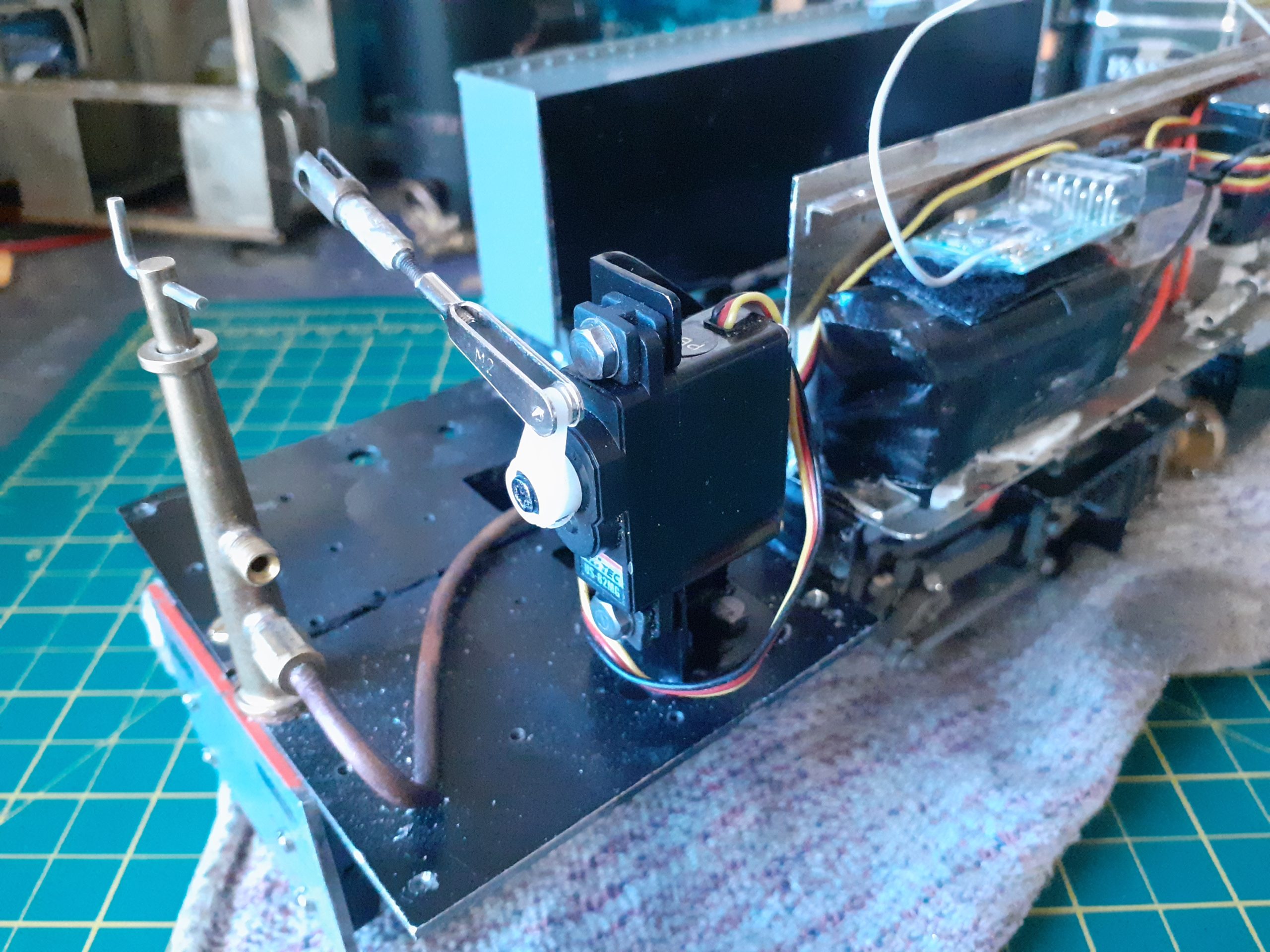
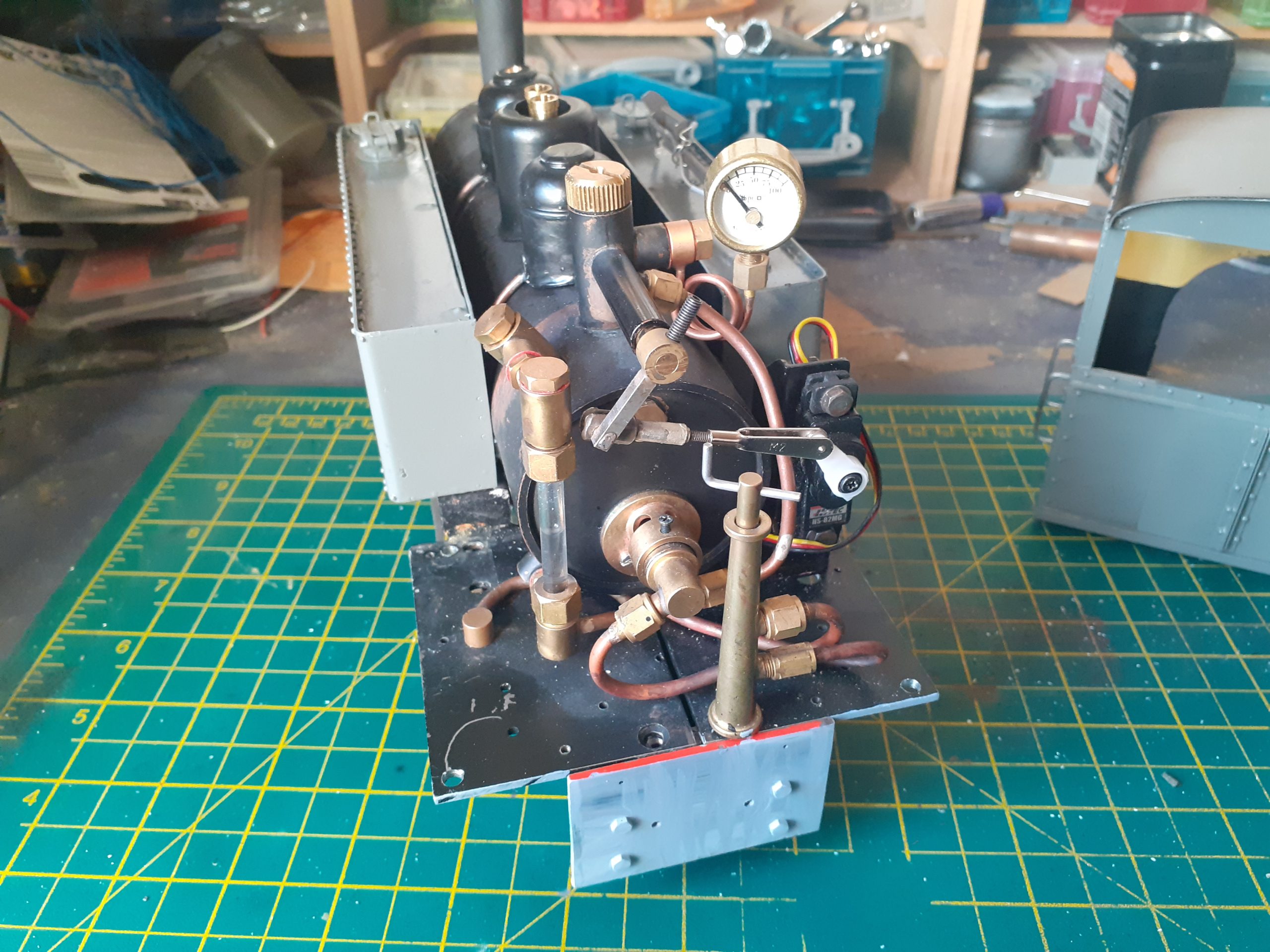
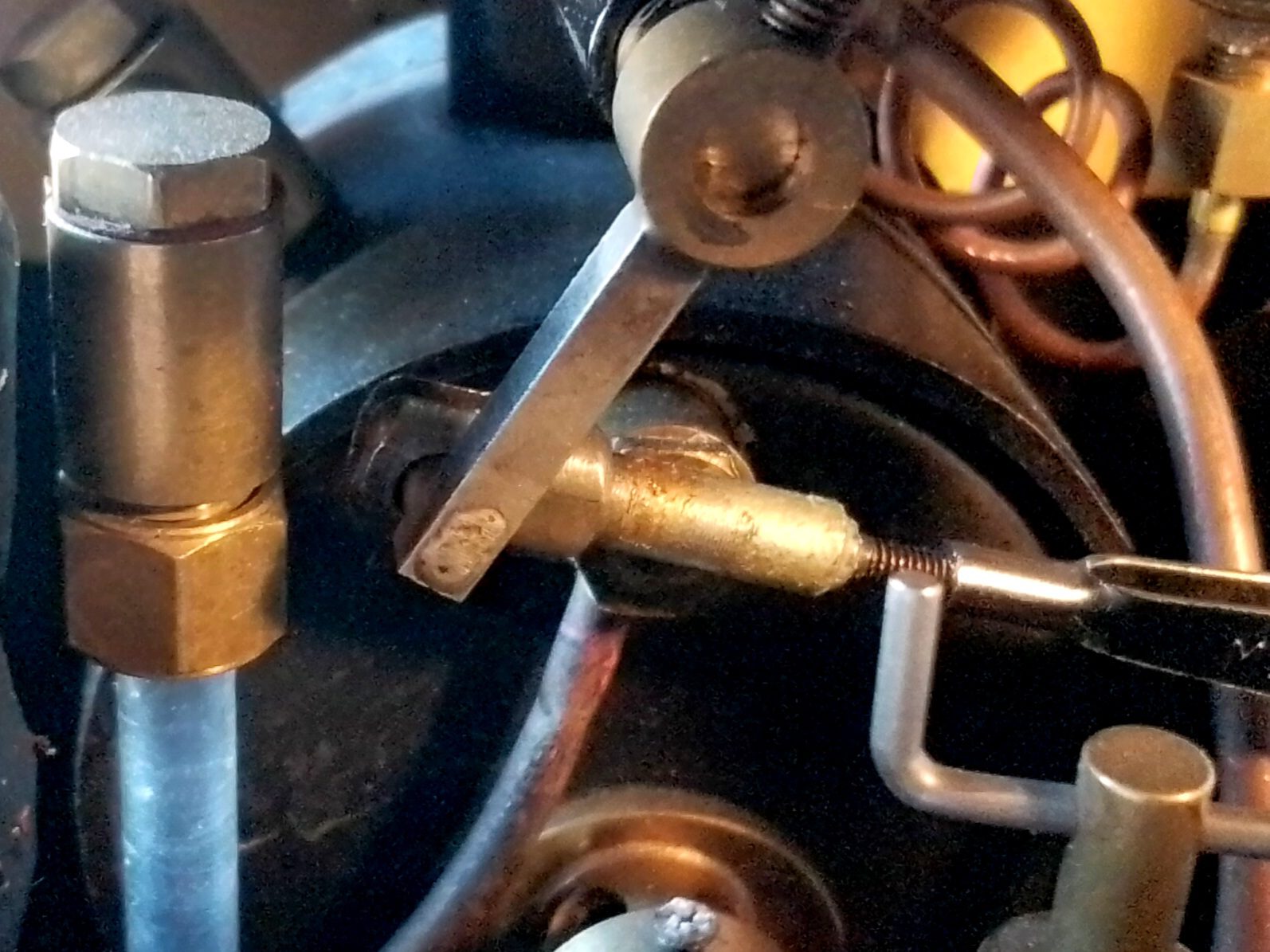
The servo for the regulator is mounted on a bracket bolted to the right-hand side of the footplate. The Accucraft regulator handle was reversed and repositioned on the spindle which had the stepped diameter reduced in length. A radio control clevis has its hole enlarged so as to slip over the regulator handle.
The regulator mounting, the servo and the linkage to operate the handle when the boiler is fitted. The train Department gas valve with feed pipe from the gas tank
The Accucraft boiler is mounted using a M3 boss under the boiler and the front end sits within the smokebox. The boiler needed to sit lower so the M3 boss height is reduced. The Accucraft smoke boxes are way too large for a narrow-gauge locomotive and in any case was the incorrect shape. A new cylindrical smokebox was made which had a flange which fits inside the boiler front tube plate flange. This allows the boiler to expand when hot. The chimney is a Talisman casting from Trenarren Talisman range as used on Pearse SLR No14. The upstand was slightly shortened before the assembly was silver soldered to the smokebox.
The new smokebox which is mounted to a frame that bolts to the chassis to give a secure mounting for the boiler
With the boiler fitted the piping up could commence. The burner and holder were fitted back into the fire tube and re-plumbed using the original pipework, albeit annealed and reformed. The blowdown pipe from the gauge glass was rerouted from the right to the left side of the cab, again using the original pipework annealed and reformed.
The cab plumbing all refitted and tested for leaks. The fully finished cab is to the right ready to mount to the footplate.
Once steam testing was completed and the locomotive deemed satisfactory the cab was fitted and paintwork completed. The works photograph had FOWLER LEEDS on the side tanks. These were custom made by Endon Valley Decal and give the locomotive a lift.
Ready for work
Modifying the lubricator and thye Gauge glass fittings
March 2026
After a period of running the locomotive a couple of issues came to light which needed amending.
Steam Oil Lubricator.
I’d reused the original Accucraft lubricator which had been adequate for the locomotive as designed. However, I’d fitted a much larger gas tank giving runs well over three quarters of an hour. On completion of one run because I found the lubricator completely devoid of oil, I decided to make a larger lubricator.
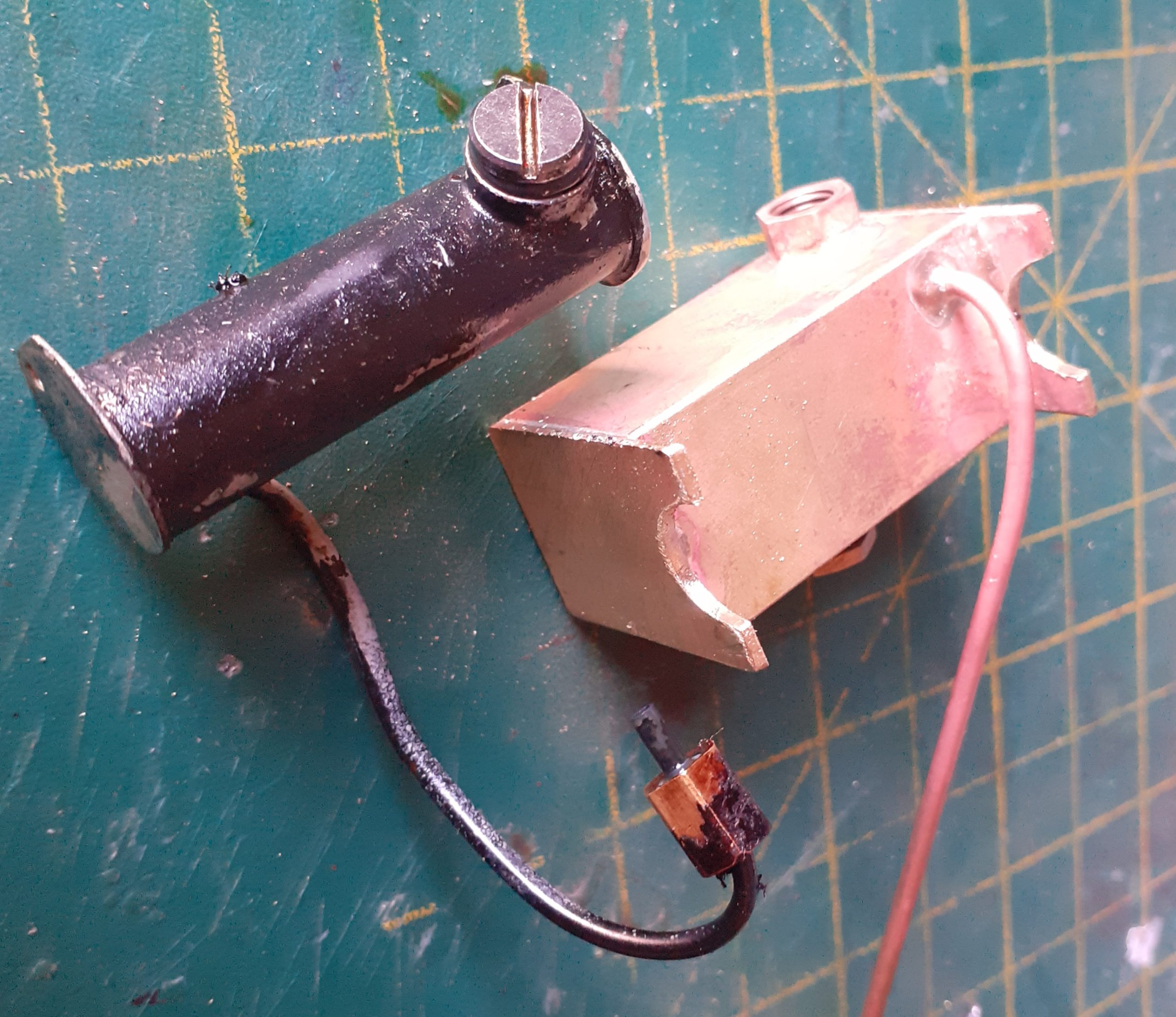
A piece of five eights square tube was cut to length and side plates were silver soldered on to form the mountings. A new M6 x 0.7 filler was made and silver soldered on top offset to the right-hand side. Then the feed pipe to the steam manifold was silver soldered in.
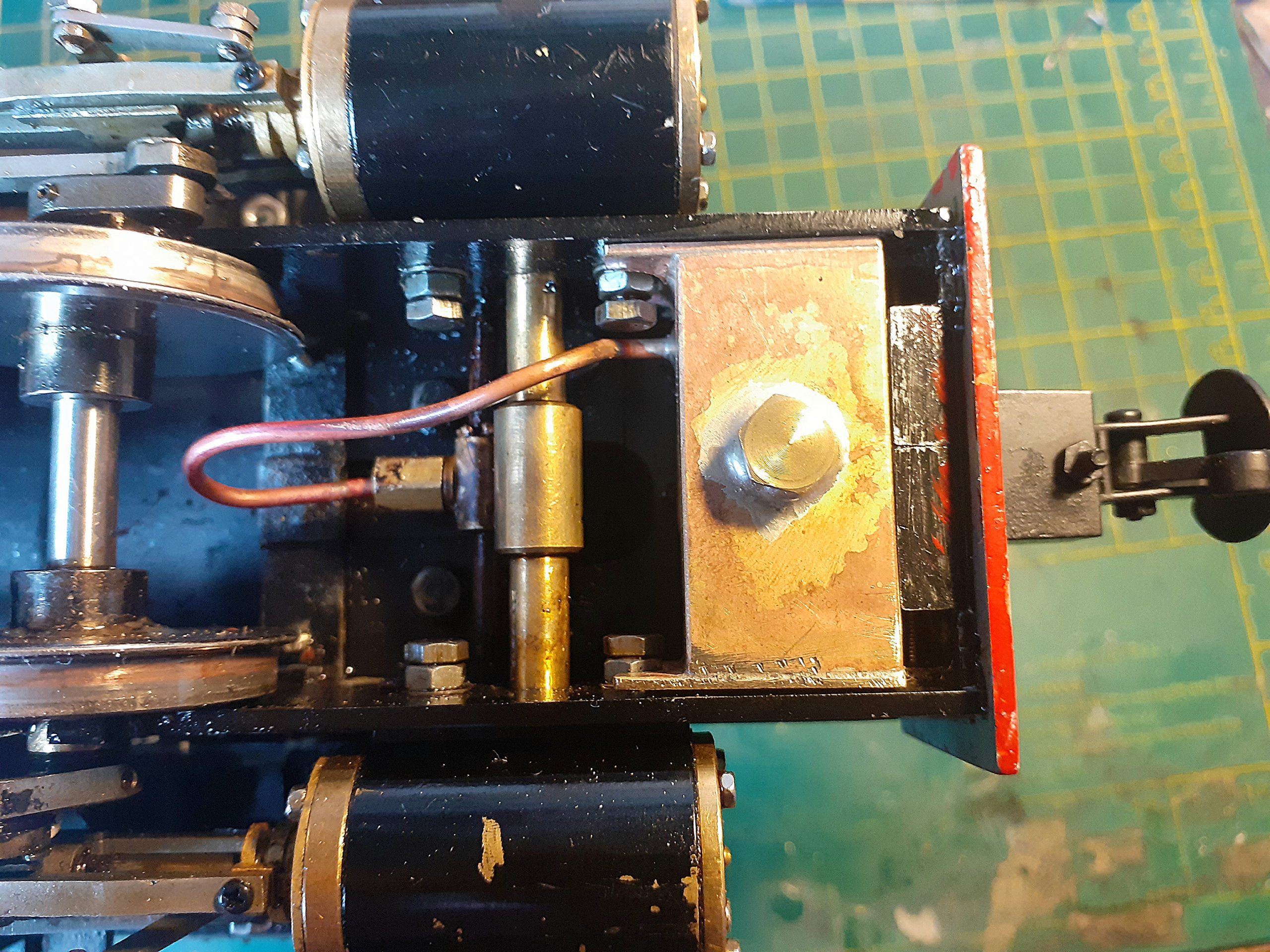
I also decided to fit a M5 x 05 drain and plug to the bottom of the lubricator to make draining easier when on the bench. The mounting side plates didn’t work as planned because space was tight. Eventually these were filed to wrap around the cylinder mounting bolts and the lubricator floats on these and is held in place by the front buffer beam. The new lubricator has more than double the capacity of the original and still has some oil in it after the gas tank is exhausted.
The Accucraft lubricator on the left and the new lubricator on the right.
The new lubricator installed between the frames under the smoke box. This sits between the cylinder mounting bolts and front buffer beam stretcher.
Boiler Water Level.
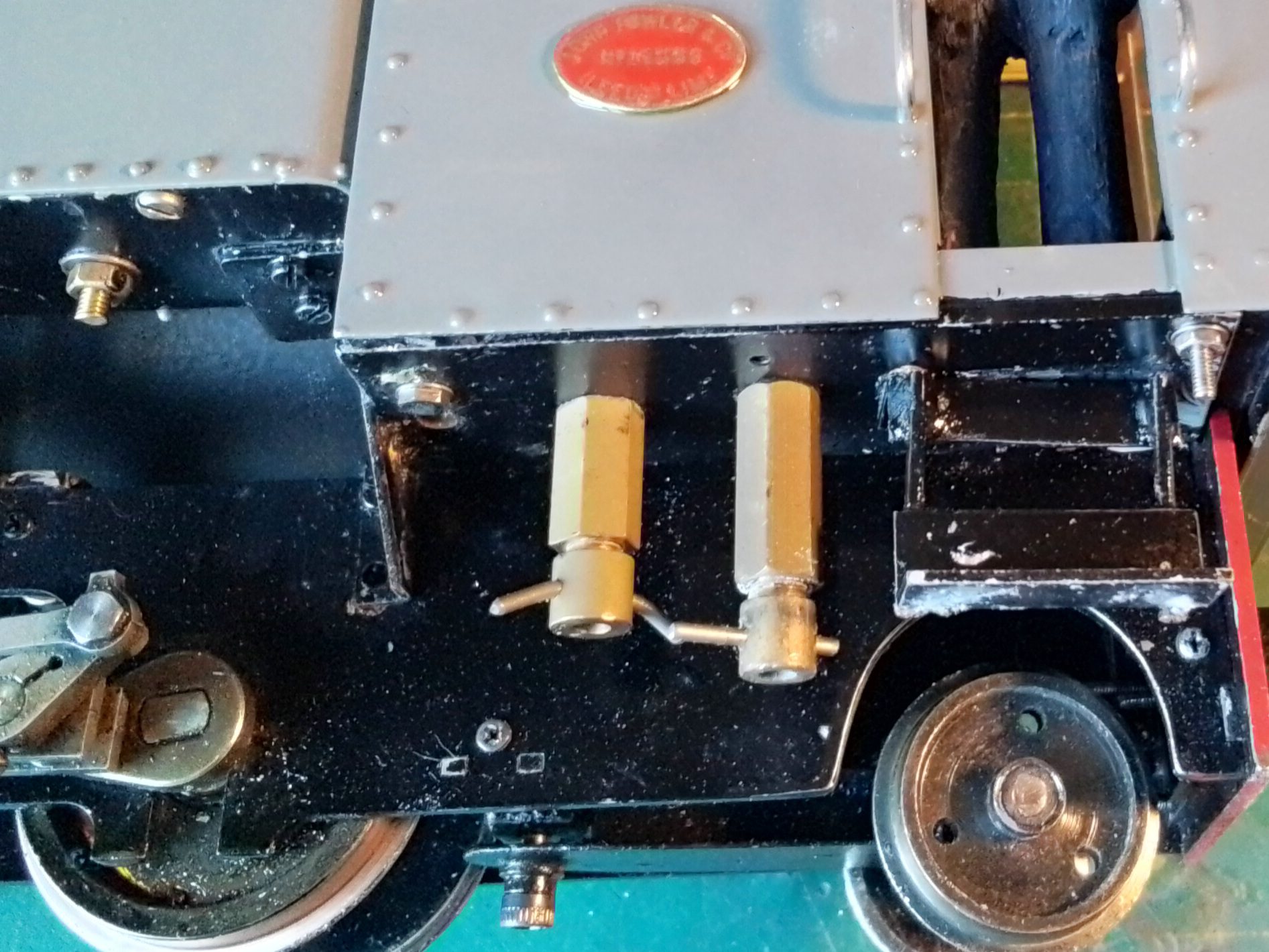
I found the sight glass on the boiler backhead unreliable. I was never sure about the accuracy of the water level in the boiler. I’ve always liked the older Accucraft locomotives with blowdown valves where the boiler can be over filled and the excess blown out as steam is raised. I noticed the boiler had a tapping on the backhead for a blow down valve but was plugged. I figured I would know that the boiler would be full at the start of a run and could be easily topped up. The existing water gauge glass blowdown valve was moved slightly further forward and mounted in a newly drill hole in the footplate. The freed up hole was used to mount a blowdown valve from the bits box. A new banjo fitting, bolt and pipe was made and silver soldered up.
The drain valves mounted under the lefthand cab floor. The lefthand valve is for the gauge glass drain but moved further forward. The righthand valve is for the boiler water level filling.
The drain pipe is by a banjo fitting into the factory fitted bushing behind the regulator servo linkage.
TW March 26