Alan Poxon explores the past and present of FR gravity trains

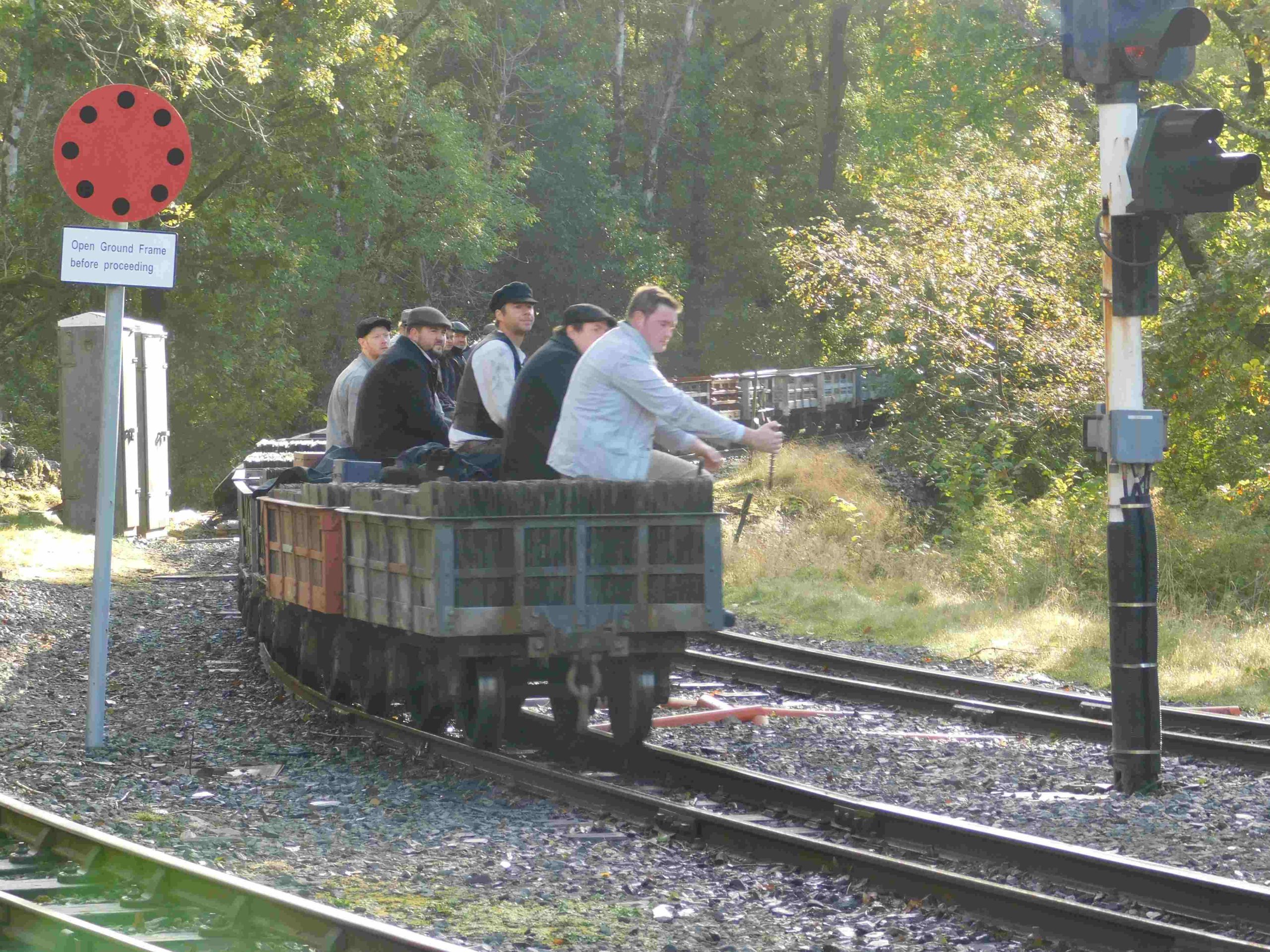
Gravity train at speed, preparing to exchange line tokens at Tan y Bwlch

Gravity trains, as the name indicates, move downhill without the aid of a locomotive. The Ffestiniog Railway was surveyed by James Spooner for gravity working between Blaenau Ffestiniog and Boston Lodge. When the railway opened in 1836, gravity trains consisted of about eight wagons travelling at around 10 mph. As slate production increased, the gravity trains became much longer and much faster.

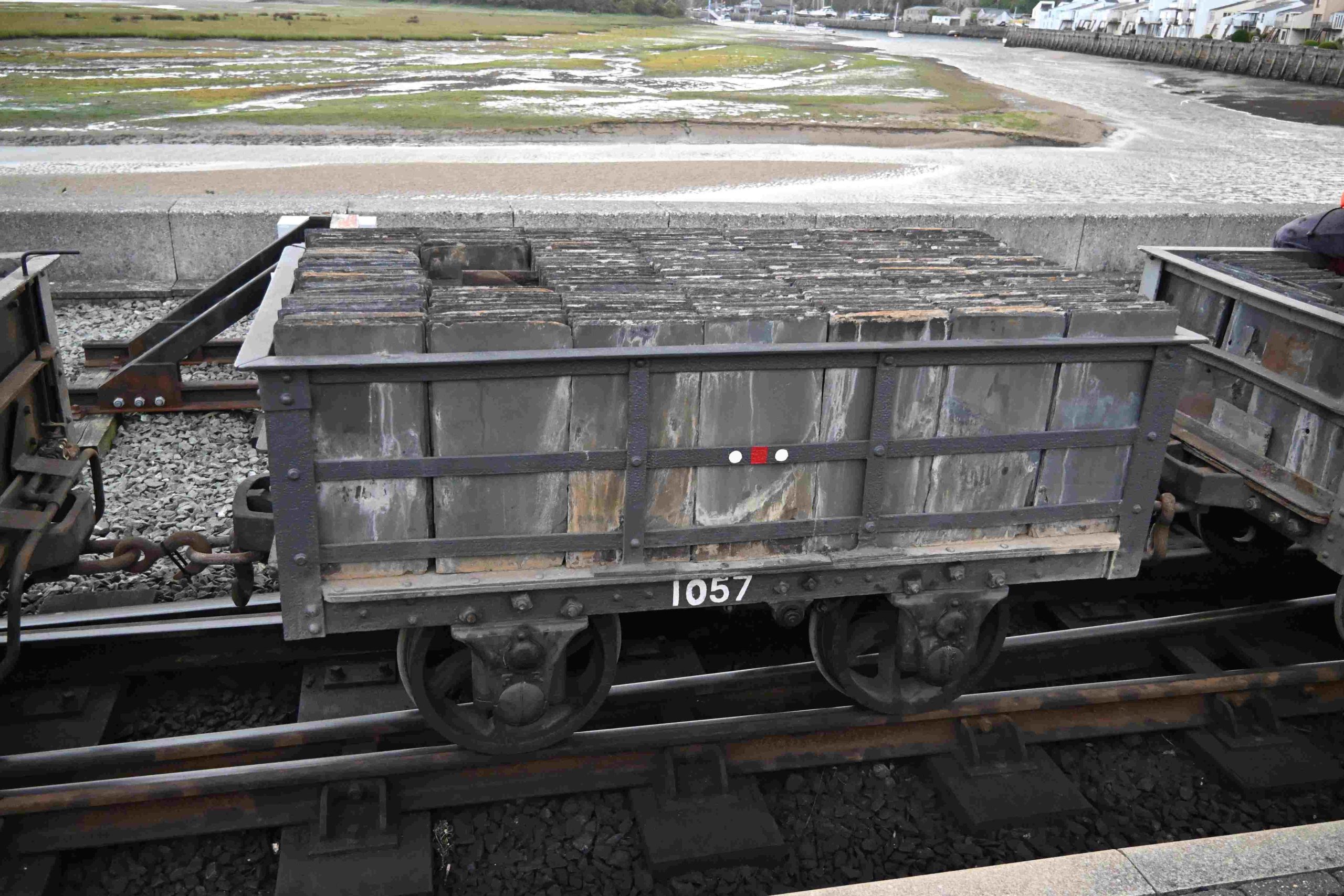
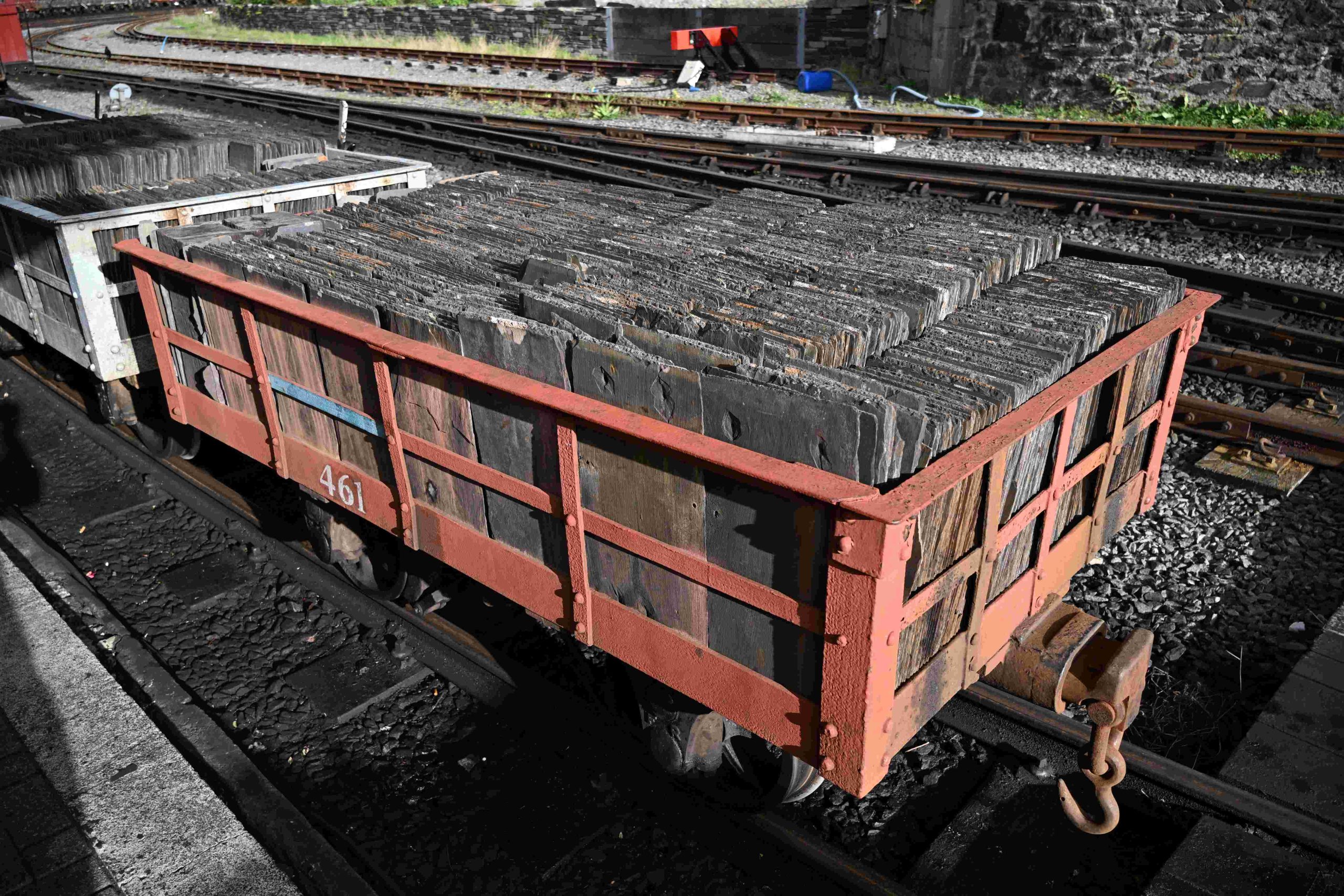
Ffestiniog 2 ton slate wagon.

Ffestiniog 3 ton slate wagon.

The Ffestiniog gravity trains were originally assembled at the junction of the Dinas and Duffws branches at Blaenau Ffestiniog. The trains consisted of 2 ton and 3 ton slate wagons from the various quarries plus, when necessary, slate slab wagons. Two slate wagons with brakes were arranged at the front of the train, with other braked slate wagons evenly distributed along the length of the train.

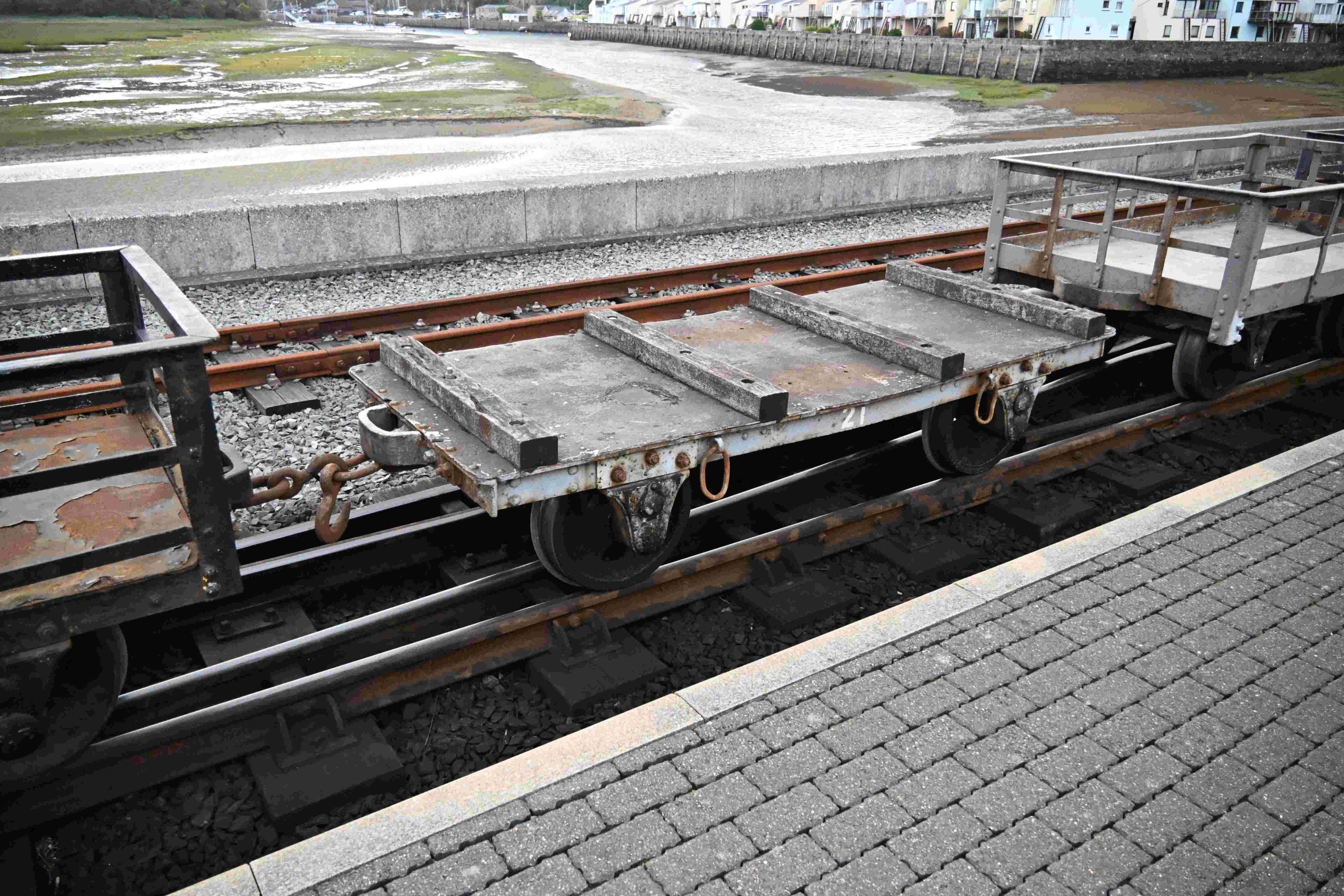
Ffestiniog slate slab wagon.

From 1836, the Ffestiniog gravity trains were normally controlled by two brakesmen but, after 1902, three brakesmen were required for trains of more than 80 slate wagons. The brakesmen would run along the top of the loaded wagons in order to apply, or release, the brakes to control the speed of the descent. The leading brakesman was provided with a hunting horn to warn of the approach of the train.

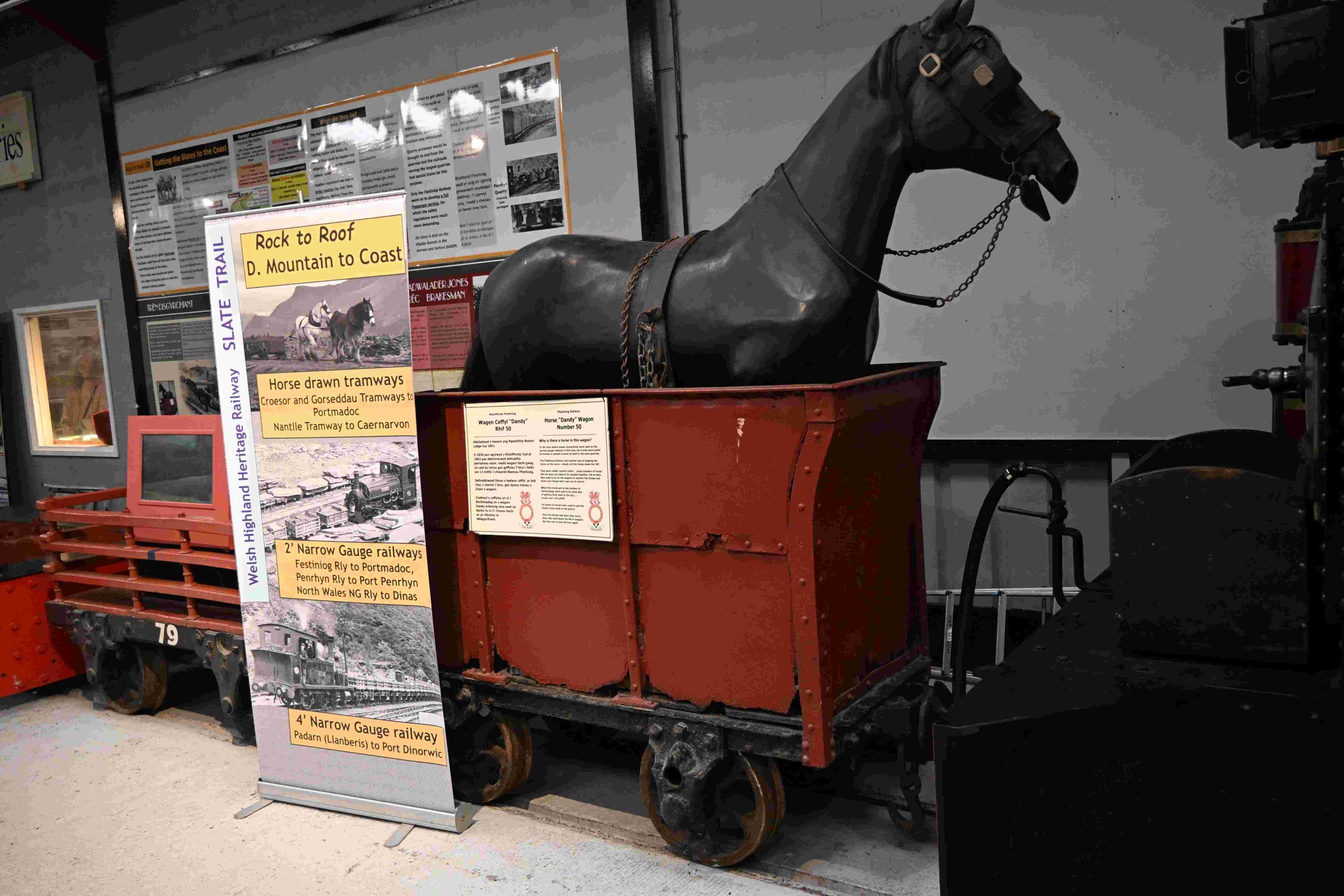
Ffestiniog horse 'dandy' wagon at the Welsh Highland Heritage Railway Museum.

The final mile or so across The Cob, from Boston Lodge to Porthmadog is flat, thus  horse-power was required to cover this final section. Similarly, the return  to Blaenau Ffestiniog required traction by horse which is why the original gravity trains consisted of eight slate wagons, the maximum number of empty slate wagons a horse could haul uphill. On the descent, the horse rode in a special ‘dandy’ wagon attached to the rear of the gravity train.

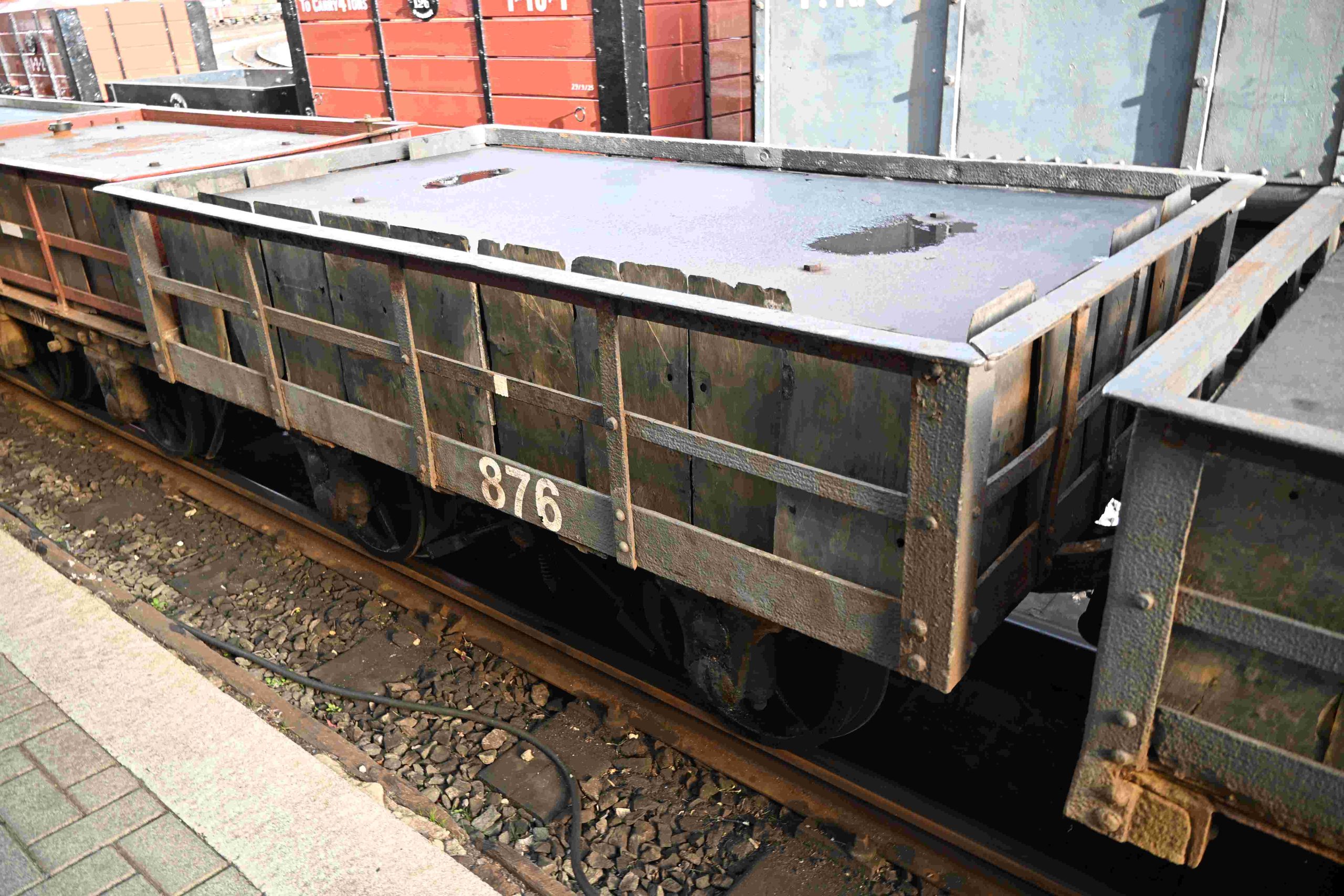
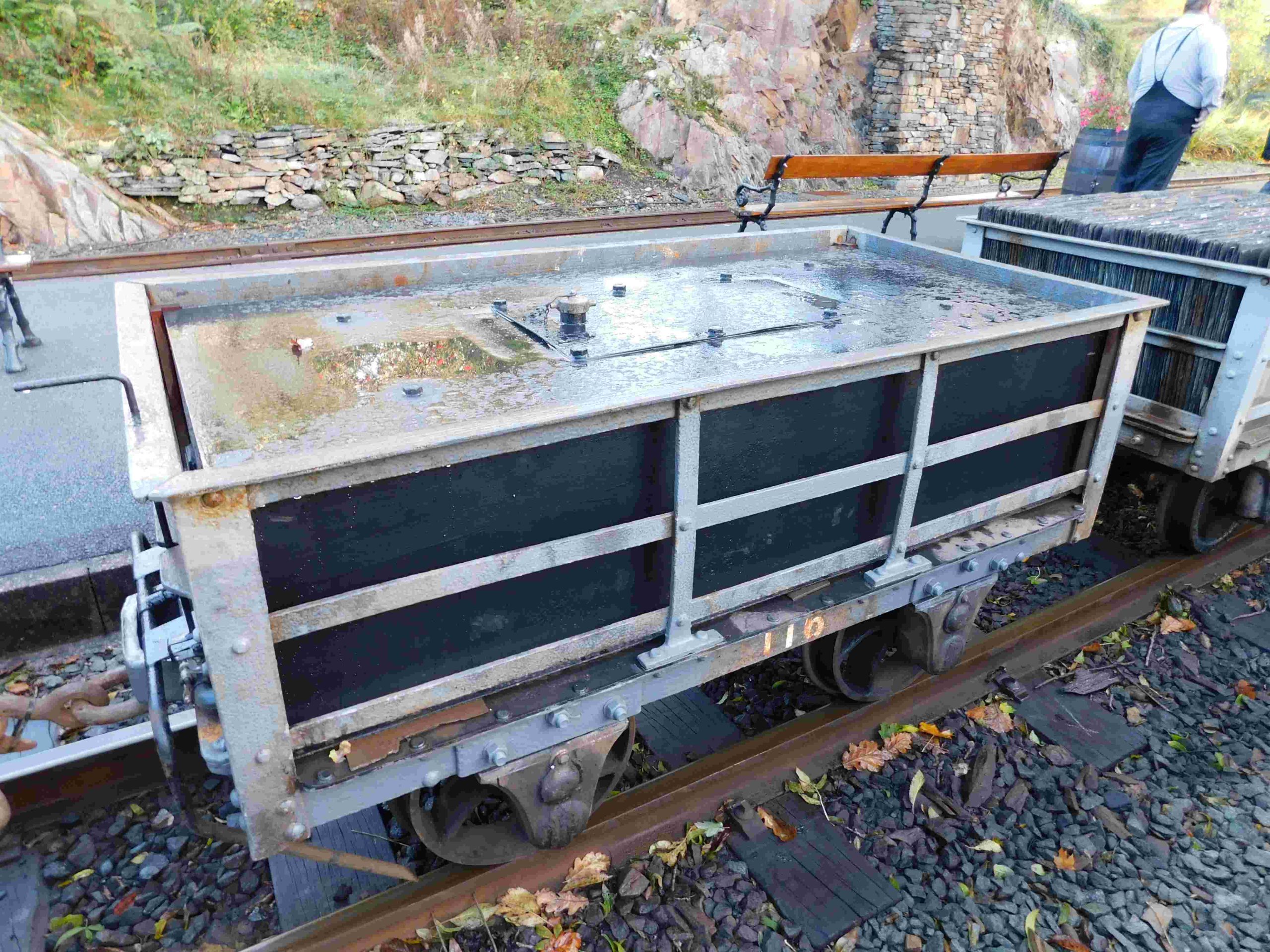
Ffestiniog 3 ton slate wagon with water tank ballast.

In 1863, steam locomotives were introduced for the return working of empty slate wagons to Blaenau Ffestiniog. A shunting engine was provided for movements across The Cob and another for shunting duties at the Dinas and Duffws junction. With ever increasing slate traffic, the double Fairlie engines were introduced in 1869 that, it was claimed, could haul 100 empty slate wagons attached to the rear of a passenger train.

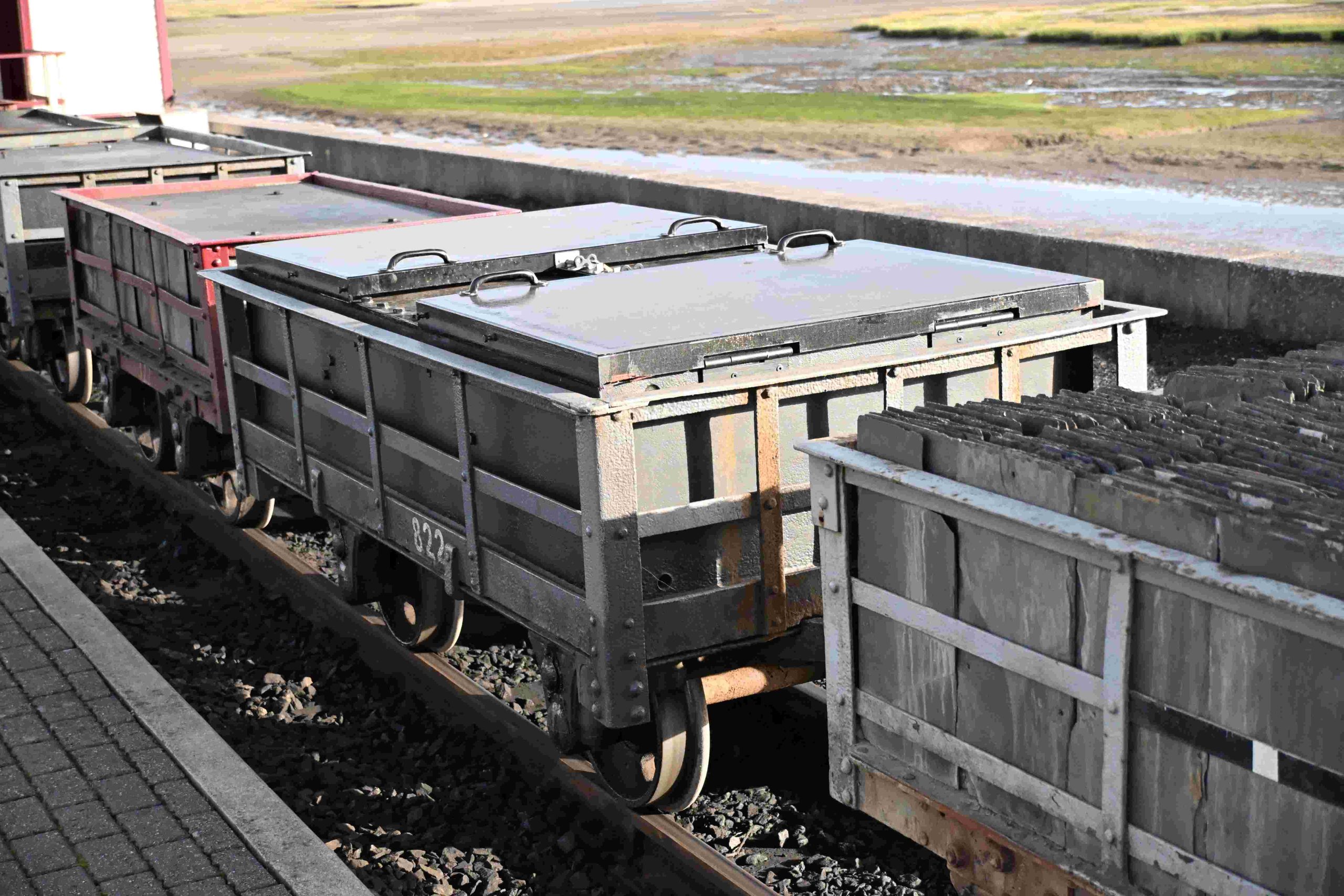
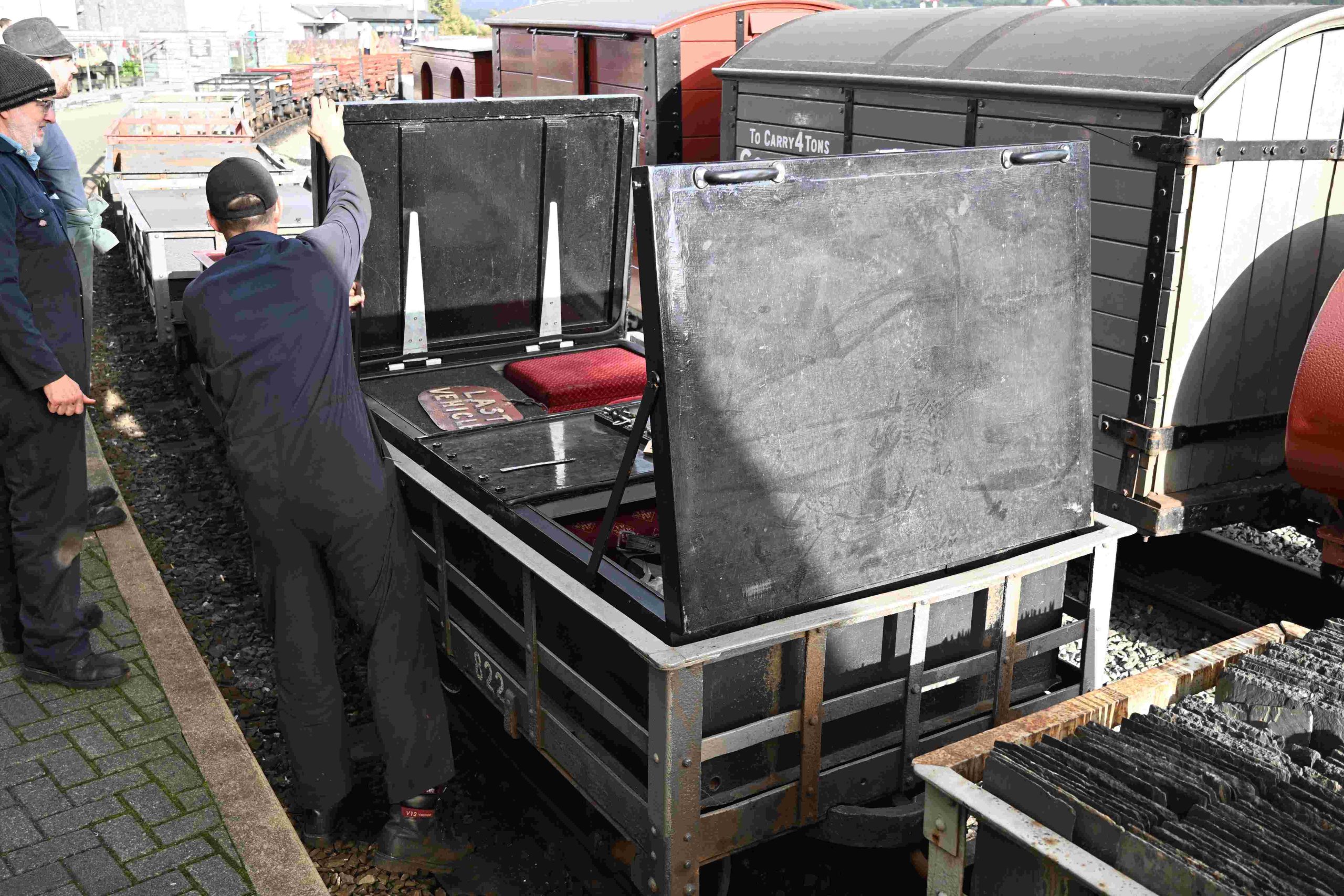
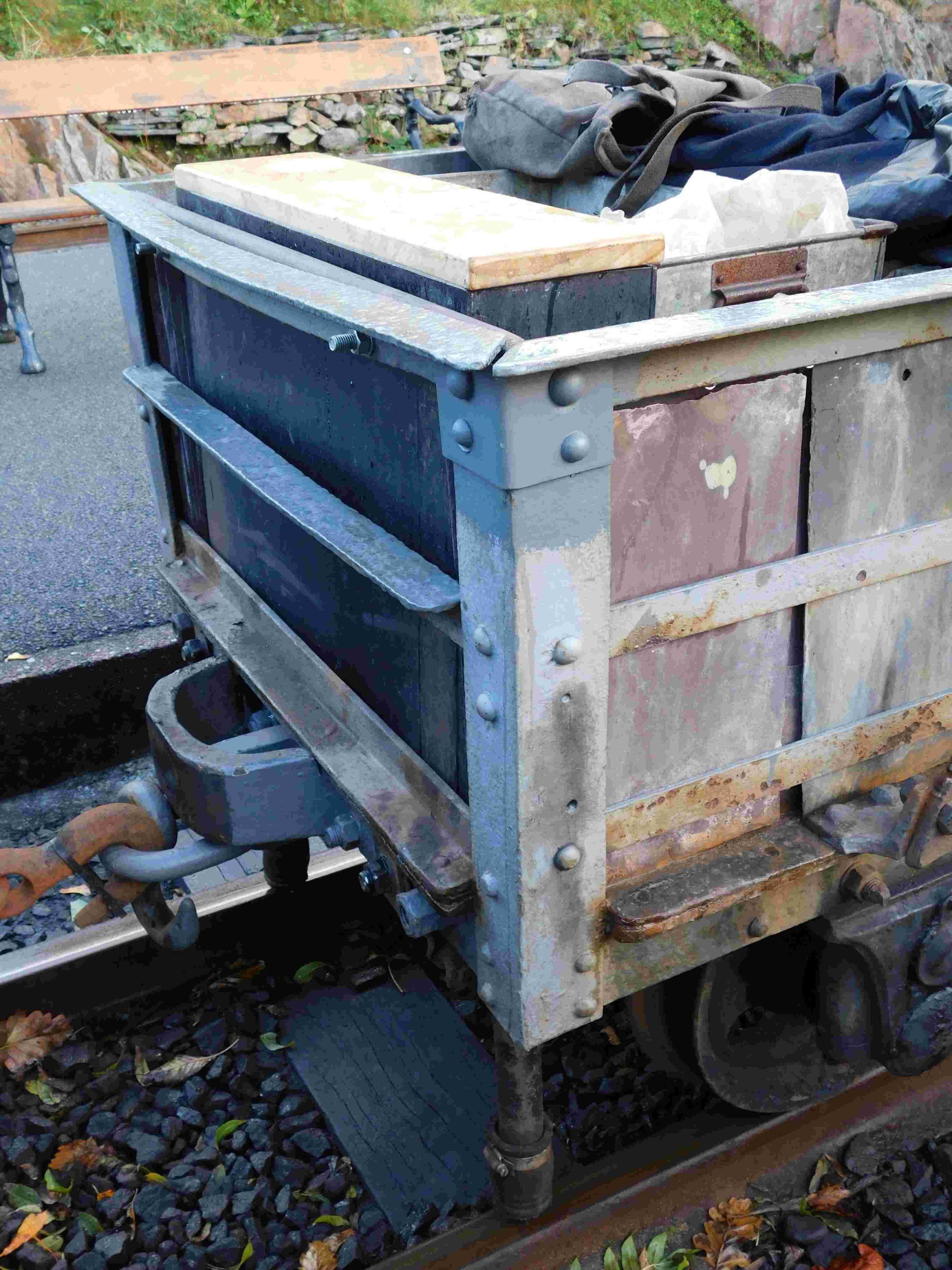
Ffestiniog 3 ton slate wagon with storage compartments.

Storage for last vehicle sign, cushions for the passengers and other materials.

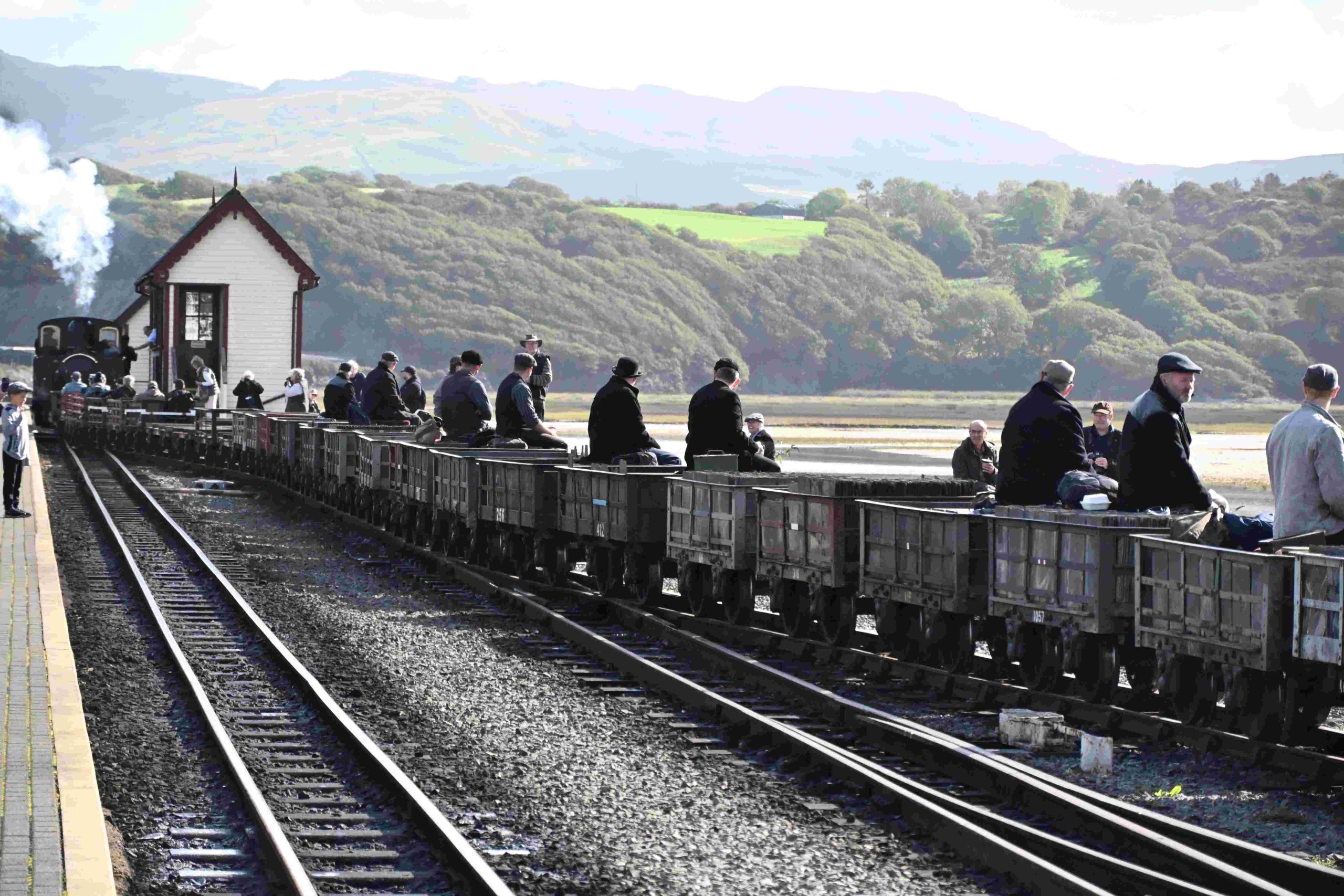
The running of Ffestiniog gravity trains was reintroduced in 1986 as an attraction at a gala event and they continue to run on occasions such as the Victorian Weekend. The number of wagons in the modern gravity train has changed over the years, with counts varying from 39 to 60. Not all wagons contain slate, as some at the rear of the gravity train are run empty and can carry passengers.

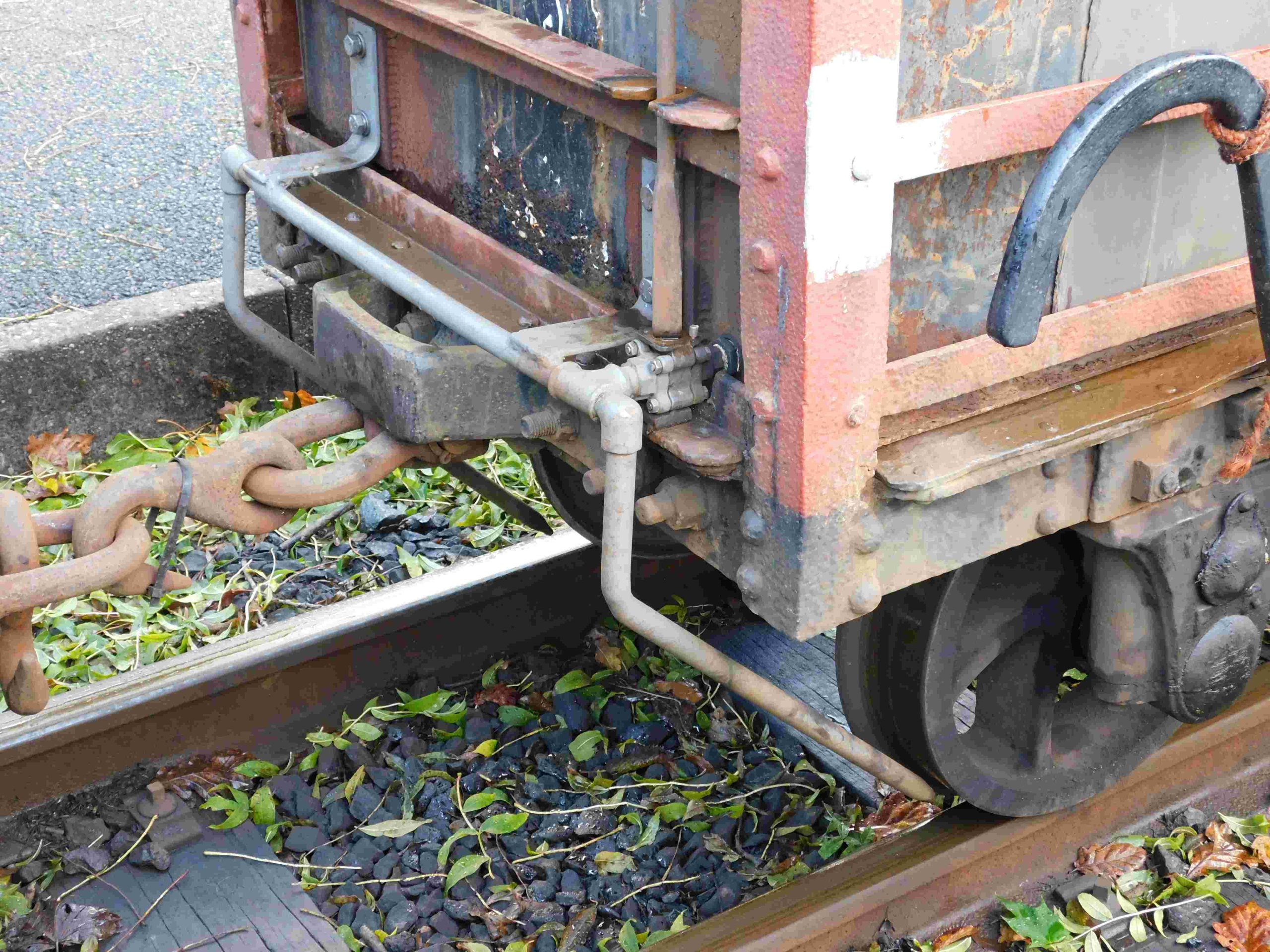
Ffestiniog 2 ton slate wagon with water tank with apparatus to wet the rails.

Detail of the rail wetting apparatus

Ffestiniog 2 ton slate wagon equipped with rail sanding apparatus.

The modern Ffestiniog gravity train has a number of adapted slate wagons. Some carry a large tank of water for additional weight, usually surrounded by slates to give the impression of a full load. Other slate wagons carrying water tanks are adapted with a mechanism to lubricate the railhead to reduce adhesion and another is adapted with a sandbox to increase grip on the railhead. Perhaps the most interesting is a slate wagon with storage for gravity train essentials.

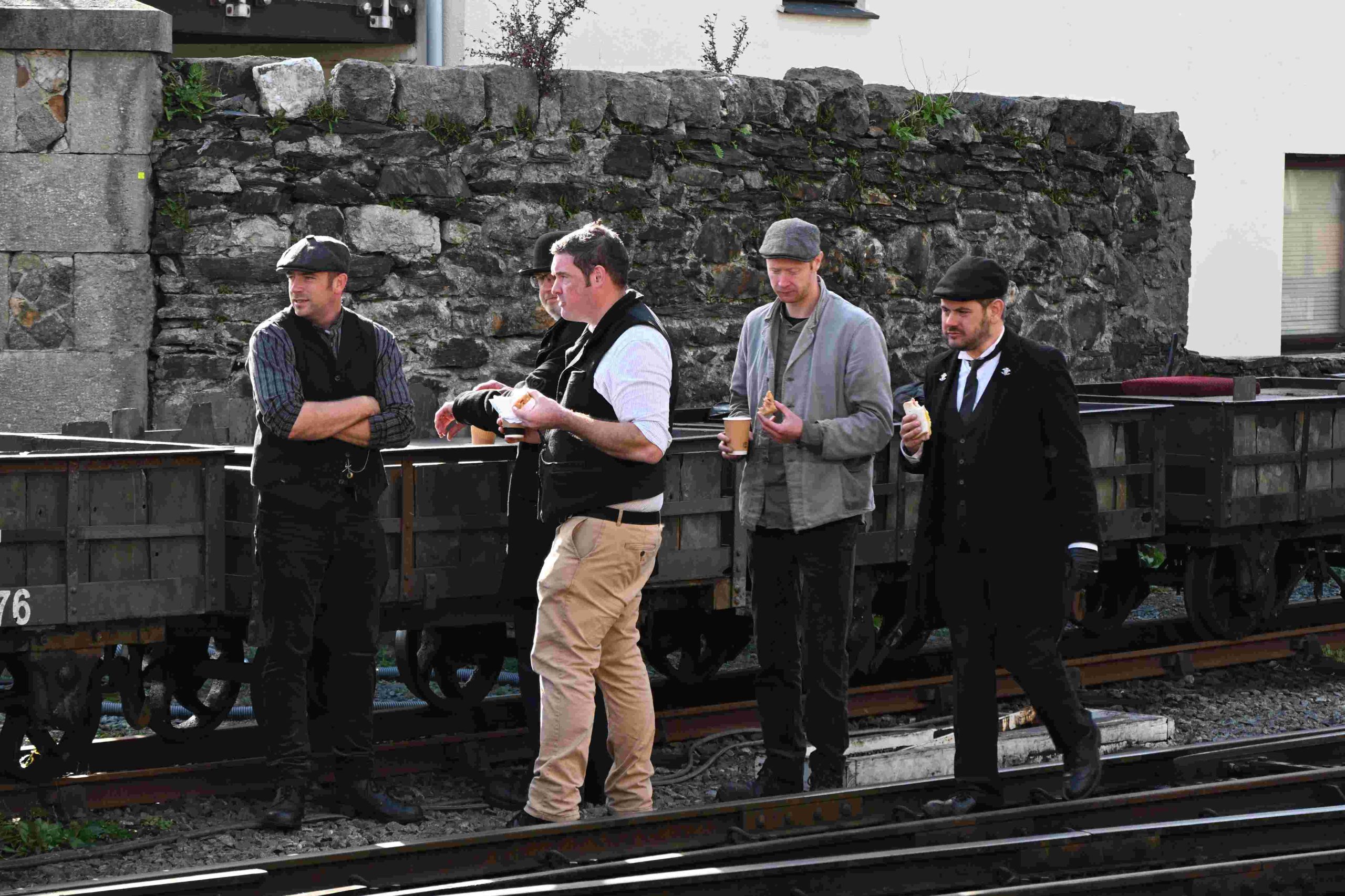
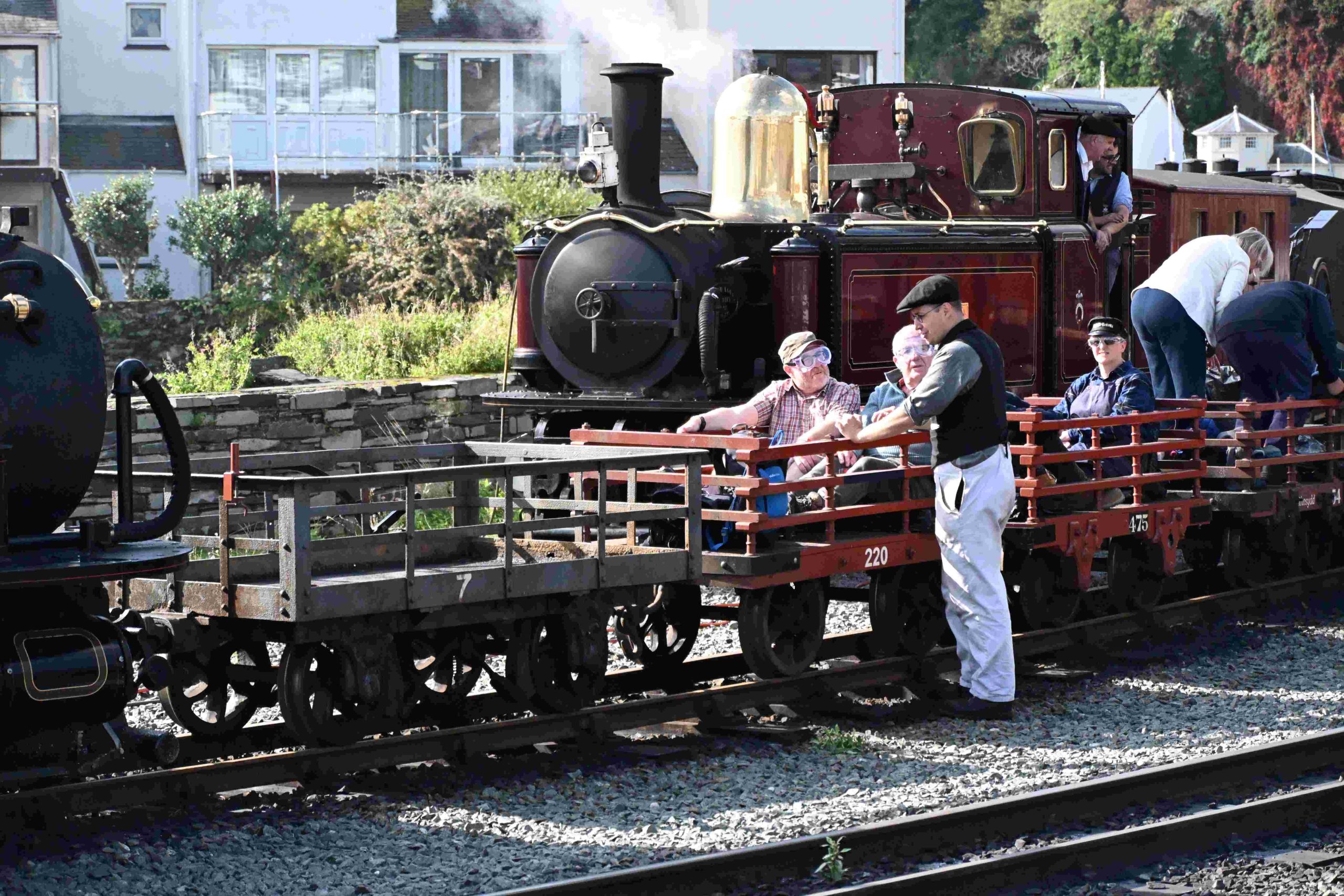
Gravity train crew breakfast before departure from Harbour Station.

Briefing the gravity train passengers before departure.

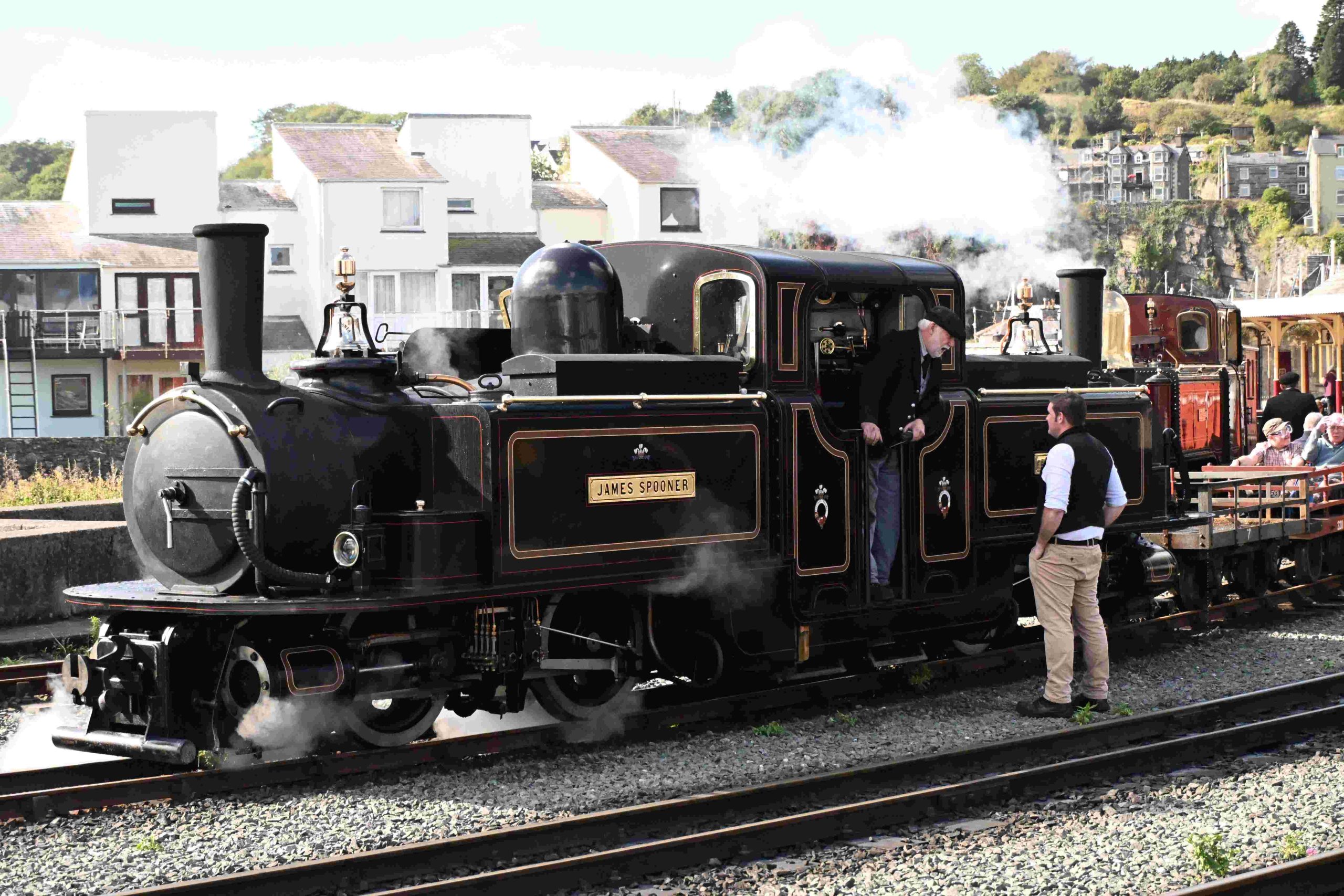
The Ffestiniog gravity train is hauled by steam locomotive from Harbour Station, known as an anti-gravity working on the timetable, to the starting point of the descent at Ddualt or the Power Station Summit. Health & Safety no longer allows the brakesmen to run along the top of moving slate wagons, instead each brakesman is sat at an individual braked slate wagon for the duration of the ascent and descent. The lead brakesman uses hand signals to communicate with the other brakesmen but he still has a bugle to warn of the gravity train approach.

Final checks before departure.

Anti-gravity train heading past Porthmadog signal box onto The Cob.

Related Articles